

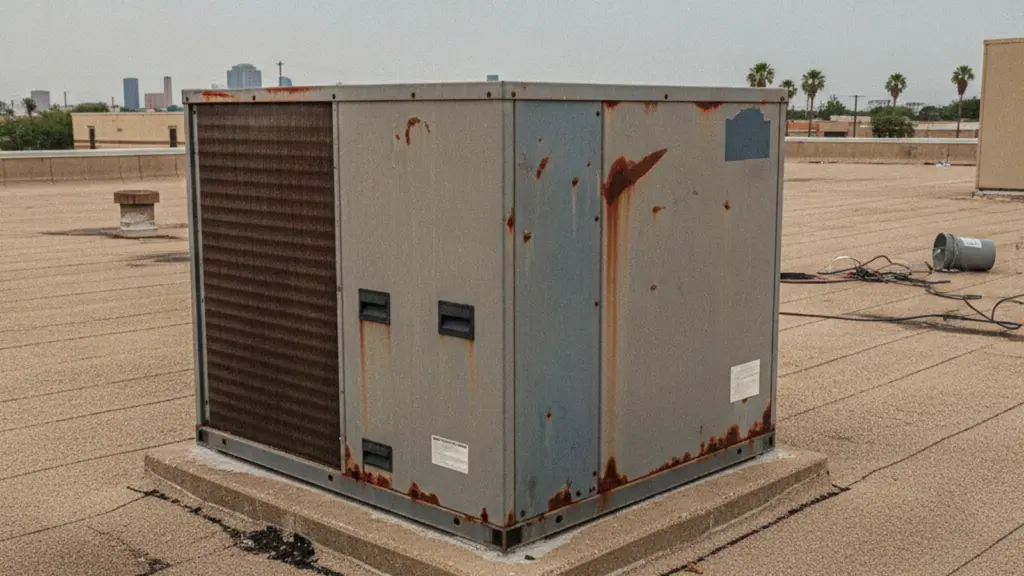
Most commercial rooftop AC units (RTUs) fail the same way: quietly, and out of sight, until they don’t work at all. Nobody is usually walking the roof of an office building to check on them the way a homeowner might notice something off with a backyard condenser. That’s exactly why neglected units tend to fail bigger and more expensively than they needed to.
Here’s some math behind why routine maintenance costs less than reactive repair, and why “it’s still running” isn’t the same as “it’s fine.”
Why RTUs Get Neglected
An RTU sits on the roof, disconnected from daily foot traffic. Staff and tenants can’t service it even if they wanted to, and most people inside a building only notice it exists when the air stops working. Without a maintenance relationship in place, that’s usually the first and only signal anyone gets that something’s wrong, and by then it’s often a bigger problem than a routine check would have caught.
The Real Cost of a Neglected RTU
A neglected unit doesn’t fail cheaply. A compressor that seizes from years without proper maintenance is a different repair bill entirely than the coil cleaning or refrigerant check that could have prevented it. Routine maintenance costs a fraction of a major component failure, and it’s the difference between a scheduled service visit and an emergency call during business hours with a building full of people and no air.
There’s also the downtime side of the problem. A restaurant, medical office, or retail space without working AC isn’t just uncomfortable, it’s often unable to operate at full capacity, or at all, until it’s fixed. That lost revenue rarely factors into how business owners think about maintenance costs, but it’s a costly factor worth considering.
What Routine Maintenance Catches
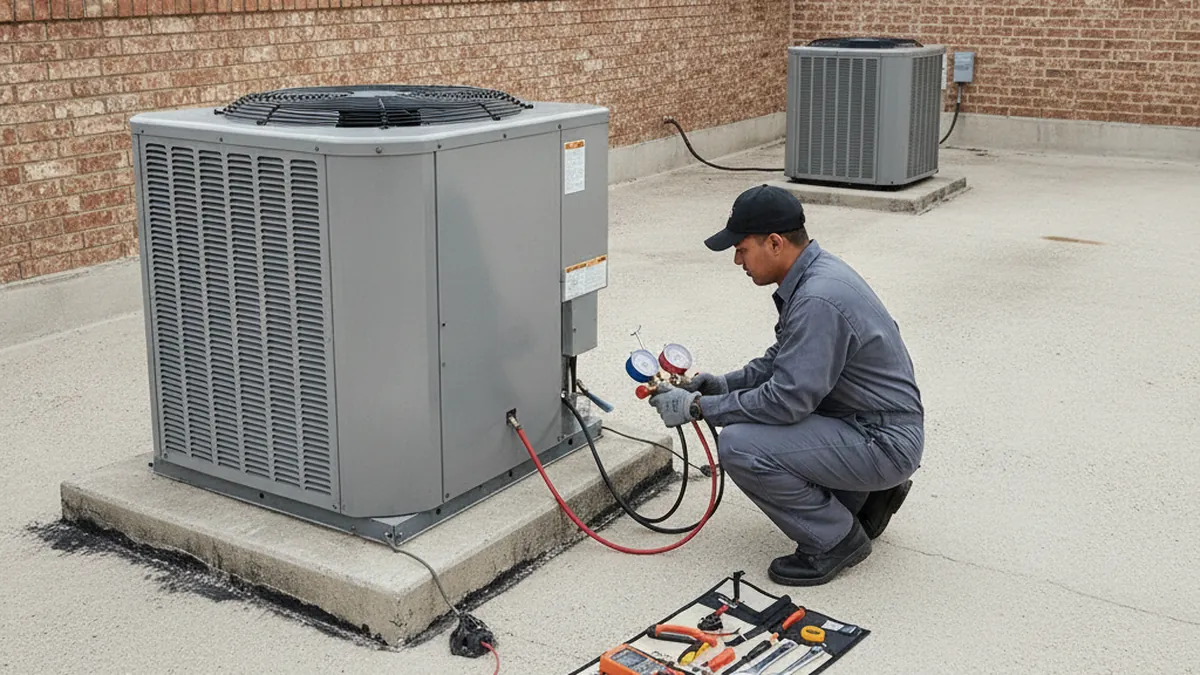
A proper seasonal check covers the filter, belt, coil, and drain line, the components most likely to cause bigger failures if left unaddressed. Catching a slipping belt or a partially clogged coil during a routine visit is a minor fix. Catching it after it’s caused a compressor to overheat is not.
If your business has been running on reactive-only repair, here’s what to know before your system fails outright and what commercial repair actually involves when it gets to that point.
Frequently Asked Questions
How often should a commercial RTU be serviced?
Twice a year is standard for most commercial systems, spring and fall, though heavier-use buildings may benefit from more frequent checks.
Is maintenance worth it if the unit is still working fine?
Yes. Maintenance isn’t about fixing what’s broken, it’s about catching what’s about to be. “Still working” and “well-maintained” aren’t the same thing, and the gap between them is where expensive failures come from.
What if I manage multiple properties?
We work with property managers to coordinate maintenance schedules across multiple units and buildings, so nothing falls through the cracks between properties and costly repairs are usually avoided or planned for.
The Bottom Line
A neglected commercial rooftop unit doesn’t just eventually fail, it fails in the most expensive way possible, at the worst possible time, with your business caught in the middle. Routine maintenance costs a fraction of what a major failure does, and it keeps you off the emergency-call list.
Managing a commercial property in McAllen? Schedule a rooftop assessment with Mission Air Conditioning before a small issue becomes a shutdown.