

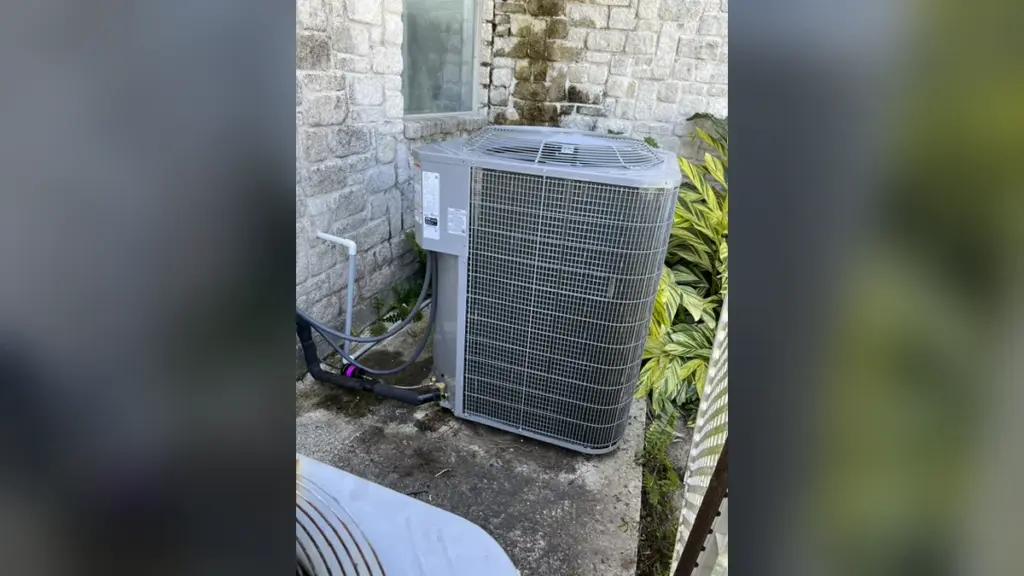
When a hard freeze is in the forecast, Valley homeowners start searching “should I cover my AC unit in winter?” For most Rio Grande Valley homes the answer is no, and for a home heated by a heat pump, wrapping the outdoor unit can cut off the home’s main source of heat on the coldest night of the year.
We service AC systems, heat pumps and furnaces for homeowners across McAllen, Edinburg and Mission.
How Often Does the Rio Grande Valley Freeze?
The Rio Grande Valley rarely freezes, but when it does, the cold can be severe. Over 1991-2020, McAllen Miller International Airport averaged fewer than one night a year at 32°F or below, and about 10 nights a year at 40°F or below.
February 2021 showed what a rare freeze can do. It was the first widespread killing freeze in the Valley since December 1989. The killing freeze ran from late on Valentine’s Day until about noon on February 16, and parts of the region dropped into the mid teens to lower 20s.
Freezing rain was reported 3 miles north of McAllen on February 14, and a ham radio operator in Pharr reported it too. The electric grid also became overwhelmed during the event. A Valley freeze can mean ice on the outdoor unit and no power at the same time, so it pays to plan for both.
Should I Cover My AC Unit in Winter?
You should not wrap your outdoor AC unit in plastic or vinyl for winter, because a full cover traps moisture and can do more harm than good. Outdoor units are built to sit outside year-round, and modern units typically don’t require winterization. A full cover can cause rust, damage to electronics from trapped humidity, and rodents and other small animals trying to escape the cold.
There is also a less obvious problem: moisture under a cover can make it colder under the cover than outside, which can freeze the unit’s coils. Depending on the manufacturer, covering a unit may void its warranty.
| Option | Guidance |
|---|---|
| Full plastic or vinyl wrap | Not recommended; traps moisture, invites rust and rodents |
| Plywood secured to the top only | Acceptable to block falling debris and reduce ice on the top |
| Shade or awning above the unit | Acceptable if it doesn’t restrict airflow above the unit |
| Lightweight breathable cover | Acceptable if it won’t hold water or restrict airflow |
| Any cover on a heat pump that runs in winter | Never |
A top-only cover makes sense in one situation: falling debris. If a tree drops branches or heavy leaves onto your condenser, plywood on top keeps the debris out while the sides stay open. Clean out the leaves and debris inside the unit before you put anything on top.
Why You Should Never Wrap a Heat Pump
A heat pump should never be covered in winter, because in winter the outdoor unit is the part that heats your home. Any heat pump that runs year-round should never be covered. A heat pump moves heat from outside into your home, even in cold weather, and a wrap cuts off the outdoor air the unit works with.
Steam from the outdoor unit is normal. On a cold, damp night, frost builds on the outdoor coil, and the heat pump runs a defrost cycle to melt it. The cloud of steam you may see during defrost is the ice melting and evaporating, and it is perfectly normal. Steam is not a reason to cover the unit or shut it off.
If you aren’t sure whether your outdoor unit is a heat pump or a straight air conditioner, ask your technician at your next visit before the cold arrives. Our post on heat pumps versus central AC in South Texas explains the difference between the two systems.
What to Do Before and During a Freeze
Before and during a freeze, the most useful thing you can do for an outdoor unit is keep it clear so air can move through it. We recommend removing leaves, grass clippings and debris from around a heat pump, and gently clearing ice buildup without sharp tools or force.
- Clear the area around the unit before the front arrives, so nothing blocks airflow or blows into the coil.
- Don’t chip ice off the coil. Never use sharp tools or force on ice buildup.
- Leave the sides open on any unit you protect with a top cover.
- Leave the thermostat on Heat, not EM Heat, while the heat pump is working normally.
- Expect AUX to come on. Auxiliary heat strips help a heat pump during defrost and when it can’t keep up, so seeing AUX on a freezing night is normal.
Save emergency heat for real emergencies. Switch to EM heat when the heat pump has failed or when the outdoor unit is “frozen solid or damaged.” EM heat shuts the heat pump off and runs only the backup heat, and the electric bill can climb quickly if it runs for days. Avoid switching the system on and off repeatedly.
What If the Power Goes Out?
If the power goes out during a freeze, the safest move is to keep your family warm without creating a carbon monoxide or fire risk. Never run a generator inside the house or garage, even if doors and windows are open, and keep it outside more than 20 feet from windows, doors and vents. Use a battery-powered or battery backup CO detector whenever a generator is running.
Never heat the house with a gas oven. It is a carbon monoxide risk, and carbon monoxide is an odorless, colorless gas that kills without warning.
Treat space heaters with care. From 2017 to 2019, portable heater fires were only 3 percent of home heating fires but 41 percent of the fatal ones. Keep a space heater at least 3 feet from anything that can burn, and turn it off when you leave the room or go to sleep.
What to Check After the Freeze
After the freeze passes, check that the outdoor unit is free of ice and that the house heats normally on the regular Heat setting. Call an HVAC professional if a heat pump keeps switching into defrost, or if its defrost cycles get longer and longer while frost and ice spread across the unit.
- Look at the outdoor unit. A little frost that clears during defrost is normal. A unit encased in ice that doesn’t clear is not.
- Switch the thermostat back from EM Heat if you used it, and confirm the heat pump heats on its own.
- Look for debris that blew into the fins or around the base during the storm.
- Book a checkup if the system struggled. We recommend a professional heat pump check at least once a year, ideally before the heating season begins.
A freeze is also a reminder to get ahead of summer. McAllen’s average high is back above 90°F by May. Our fall tune-up guide for the RGV and our post on cleaning AC condenser coils cover the outdoor-unit care that keeps it ready.
FAQ
Is it a good idea to put a tarp over my AC unit?
A tarp over your AC unit is not a good idea, because a non-breathable cover traps moisture and can lead to rust, damaged electronics and rodents trying to escape the cold. If falling debris is the concern, a piece of plywood secured to the top only, with the sides left open, does the job without trapping moisture. Never put a tarp on a heat pump that is heating your home.
Does putting an umbrella over an AC unit help?
An umbrella-style shade over an AC unit can help reduce the unit’s exposure, as long as it doesn’t block the airflow above the unit. A shade or an extended awning is an acceptable way to reduce exposure, and plywood secured to the top is an option that also reduces ice buildup. The fan on top of the unit needs open space to move air.
Should I cover my heat pump in winter?
You should never cover a heat pump in winter if it heats your home. Heat pumps that run year-round should never be covered, because the outdoor unit has to pull heat from outdoor air. A cover cuts off the outdoor air the unit needs to do that job.
What should I do if my heat pump is covered in ice?
If your heat pump is covered in ice, let its defrost cycle work first and don’t chip at the ice with tools. Gently clear ice buildup without sharp tools or force, and switch to emergency heat only if the unit is frozen solid or damaged. If ice keeps spreading or the defrost cycles keep getting longer, call a technician.
Freeze-Ready Heating and AC Service in the Valley
Valley freezes are rare, and a few simple steps help your system come through one. Mission Air Conditioning works on heat pumps, heat strips, gas furnaces and air conditioners for homeowners in McAllen, Edinburg, Mission and the surrounding Rio Grande Valley.
If your outdoor unit iced over, your heat pump is stuck on EM heat, or you just want the system checked before the next front, see our HVAC maintenance service. Contact Us or call or text (956) 477-4967.