

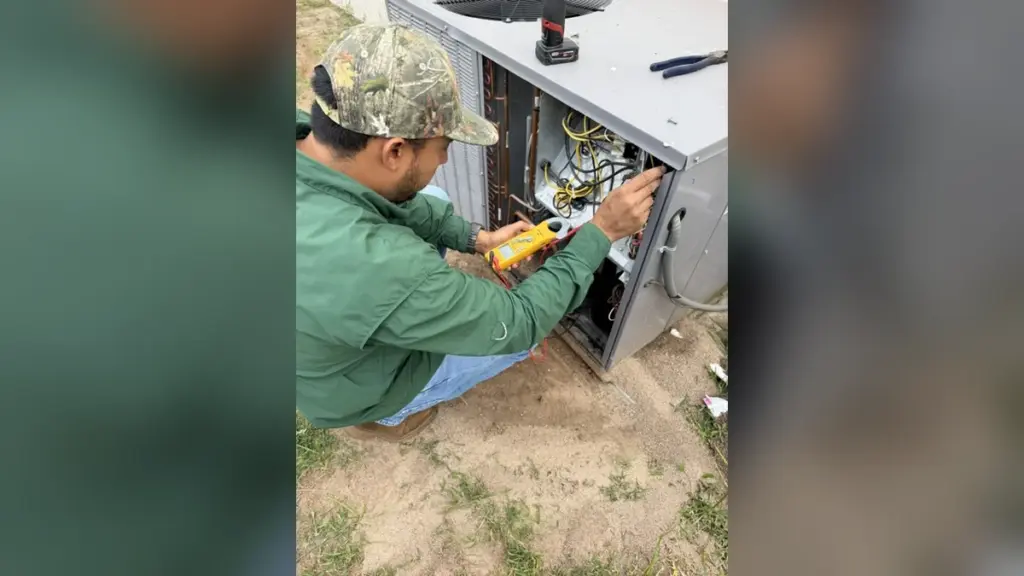
If you are searching for heater repair near me on the first cold night of the season, it might be because of a faint burning-dust smell you encountered. This is usually normal, but a smell that will not clear means it’s time to call for help.
The first cold front is the night a McAllen heater gets its first real test in months, and plenty of first-night smells, steam and clicks are normal. If you need any help during this time, know that Mission Air Conditioning repairs electric heat strips, heat pumps and gas furnaces for homeowners in McAllen and across the Valley.
How Often Does a Heater Run in McAllen?
A McAllen heater runs only a handful of nights a year, which leaves it idle for months at a time. Over 1991-2020, McAllen Miller International Airport averaged about 10 nights a year with a low of 40°F or colder, and fewer than one night a year at freezing.
| Month | Normal daily low | Average nights at 40°F or below |
|---|---|---|
| November | 60.1°F | 0.8 |
| December | 54.1°F | 3.3 |
| January | 52.7°F | 3.9 |
| February | 56.9°F | 1.8 |
| March | 62.7°F | 0.5 |
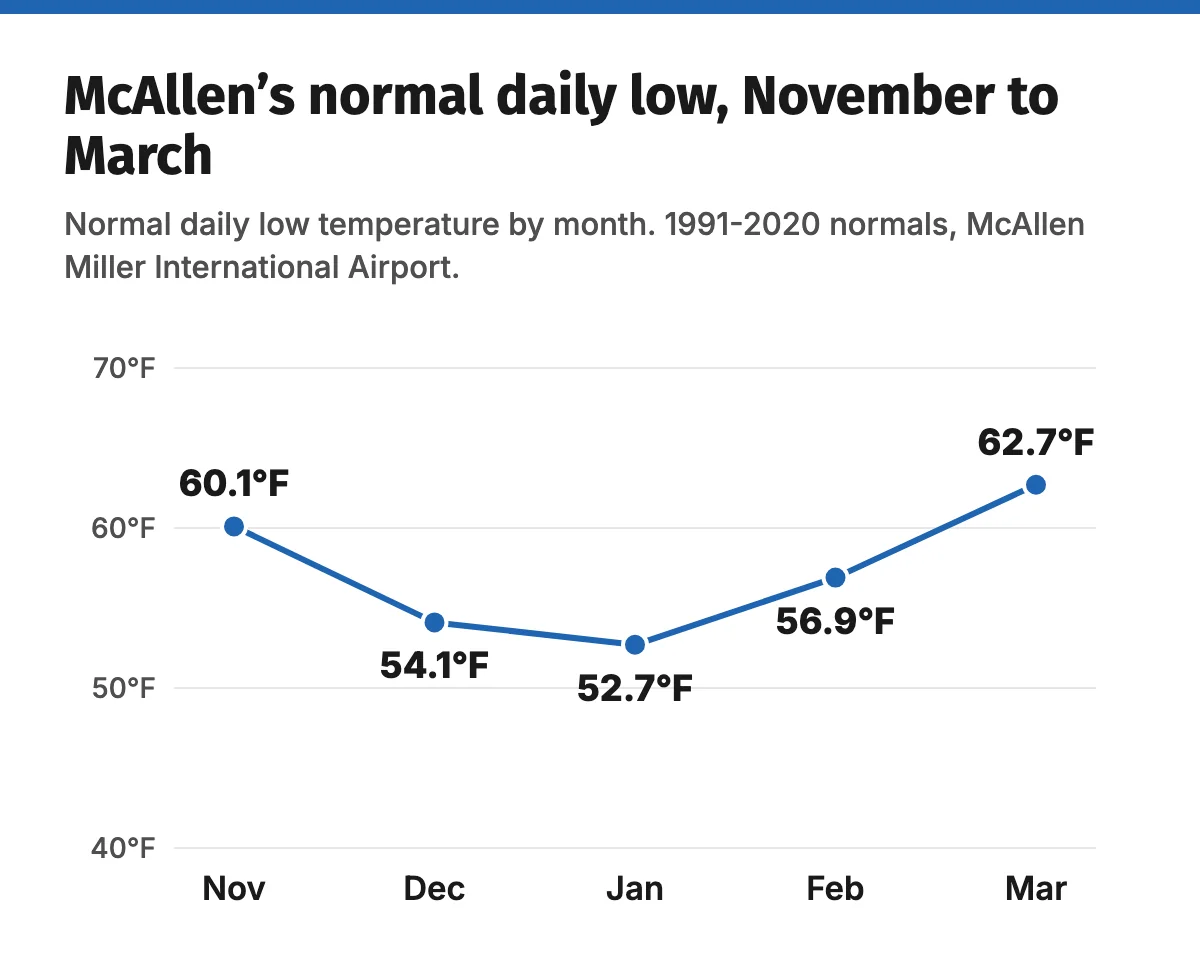
Normal daily low by month, November to March. 1991-2020 normals, McAllen Miller International Airport.
In a typical year, McAllen needs about 11 times more cooling than heating. A heat strip, heat pump or furnace can sit idle for most of the year collecting dust, and nobody tests it until the night it is needed.
Is a Burning Smell Normal the First Time You Turn On the Heat?
A light burning smell the first time the heat comes on is usually normal, because dust that settled on the heating parts over the off-season burns off. It should clear out after a short time.
If the smell continues for a long time, though, turn the heat off and call a heating company. We also suggest running the heat once before a cold snap, with a few windows open, so the dust burns off on a mild day instead of on the coldest night.
A dust smell fades. A smell that lingers, gets stronger, or comes back every time the heat cycles is a reason to shut the system off at the thermostat and call for service.
What’s Normal for a Heat Pump on a Cold Night?
A heat pump on a cold night may send up a cloud of steam, stop its outdoor fan for a few minutes and make a swooshing sound, and all three are normal parts of its defrost cycle. In winter, a heat pump’s outdoor coil runs about 10 to 20°F colder than the outdoor air, so frost can form even when it is in the low 40s outside.
To clear frost, a heat pump briefly reverses and warms the outdoor coil. The steam that rises during defrost is the ice melting and evaporating, and it is perfectly normal. The first cloud of steam from a heat pump can be alarming if you don’t know to expect it.
Cool air during defrost can be normal on some systems. Most heat pumps have backup heat strips that keep the air warm during defrost. Homes without backup heat, and some dual-fuel systems, may feel cooler air from the vents for those few minutes, and that is normal too.
AUX on the thermostat is usually normal too. Auxiliary heat comes from electric heating strips inside the air handler that help the heat pump when it can’t keep up alone, during defrost, or when you raise the thermostat several degrees at once.
EM heat is different. Emergency heat is a setting that shuts the heat pump off completely and runs only the backup heat, which costs more to run because electric resistance heat is less efficient. Use it when the heat pump has failed or the outdoor unit is frozen solid or damaged. Needing it regularly is a sign something needs attention.
Our earlier post on heat pumps versus central AC in South Texas covers how the two systems differ.
What’s Normal for a Gas Furnace?
A brief whiff of gas when a furnace first lights for the season can be normal, while a strong or lingering gas smell is an emergency. Small, fleeting scents of gas can be normal on first startup, but a strong, lingering gas smell means you should leave the house immediately, call 9-1-1, and contact an HVAC professional from a safe place.
Never troubleshoot a gas smell from inside the house. Get everyone out first, then make the calls.
Watch the flame if you can see one. On older furnace models with a visible flame, the flame should burn blue and even, and yellow or uneven flames can mean dirty or blocked burners that need a professional. Newer furnaces use electric ignition that lights only when needed, so they don’t show a standing flame at all.
A gas furnace needs a working CO detector. A furnace burns fuel, which makes carbon monoxide, and a poorly maintained furnace can let it build up to dangerous levels. We recommend carbon monoxide detectors throughout the home. If a detector goes off, you should leave the house immediately and call 9-1-1.
What Can You Check Before You Call?
Before you call, check the thermostat setting, the supply vents, the air filter and the heat or furnace breaker. None of those checks involve opening the equipment:
- Thermostat. Make sure it is on, set to Heat (not Cool or Off), and set at least five degrees above the room temperature.
- Vents. Open the supply vents in each room and make sure furniture isn’t blocking them.
- Filter. Dirty filters restrict airflow and force the system to work harder, so check the filter monthly during heavy use. Our guide to changing your AC filter in South Texas applies in heating season too.
- Breaker. Find the breaker labeled heat or furnace and reset it one time.
- Thermostat display. Write down any error codes or warning lights on the thermostat. They can help a technician diagnose the problem faster.
One reset is the limit. Toggle the heat or furnace breaker one time. If that results in a fuse blowing, contact an HVAC professional, because there may be a bigger furnace problem at hand. Do-it-yourself furnace repair also carries real safety risks.
When Is It Time to Call for Heater Repair?
It’s time to call for heater repair when the system blows cold air on Heat, when a smell won’t fade, when a breaker trips a second time, or when a heat pump can’t stay out of defrost or emergency heat. Here are the signs that point to a service call:
- The air from the vents isn’t warm after the system has run for several minutes on Heat.
- The burning smell lasts well past the first run, or it gets stronger instead of fading.
- The breaker trips or a fuse blows after one reset. That can mean a bigger furnace problem.
- The heat pump stays covered in ice, or it switches into defrost over and over with longer and longer cycles.
- The system only heats on EM heat. Relying on emergency heat regularly is a sign something needs attention.
- You hear loud banging or hissing. Those noises could indicate a larger problem, and strange furnace noises may mean an electrical issue.
- Air isn’t moving through the vents at all, even though the system sounds like it is running.
- A CO detector goes off or you smell gas. Leave the house first and call 9-1-1 from outside, then call for repair.
Ignoring warning signs can turn a minor repair into a major replacement. Our HVAC repair page has more on repair service in the Valley.
FAQ
Who do you call when your heat doesn’t work?
Call an HVAC company that repairs your type of heat, whether that is electric heat strips, a heat pump or a gas furnace. In McAllen, Edinburg, Mission and across the Rio Grande Valley, we repair all three. If you smell gas or a CO detector sounds, leave the house and call 9-1-1 first.
How long does it take for dust to burn off a heater?
Dust usually burns off a heater after a short run at the start of the season. If the smell is still there after that first stretch of use, turn the heat off and call a heating company.
Is it normal for an electric heater to smell like burning?
A faint burning-dust smell is normal the first time electric heat strips or a heat pump’s backup heat comes on for the season. The smell should fade after a short time. A smell that lingers or returns every time the heat cycles is a reason to shut the system off at the thermostat and call for repair.
Should I turn on emergency heat on the thermostat?
You should turn on emergency heat only when the heat pump has stopped working, the outdoor unit is frozen solid or damaged, or a technician tells you to. EM heat runs entirely on backup heat, which raises the electric bill if it runs for days. Use it to stay warm until the heat pump is repaired, not as an everyday setting.
Heater Repair in McAllen, Edinburg and Mission
Plenty of first-night heating surprises are normal, and the ones that aren’t are easier to fix when they are caught early. We repair heat strips, heat pumps and gas furnaces for homeowners in McAllen, Edinburg, Mission and the surrounding Rio Grande Valley. Contact Mission Air Conditioning or call or text (956) 477-4967 to have us check your heat before the next cold front.