

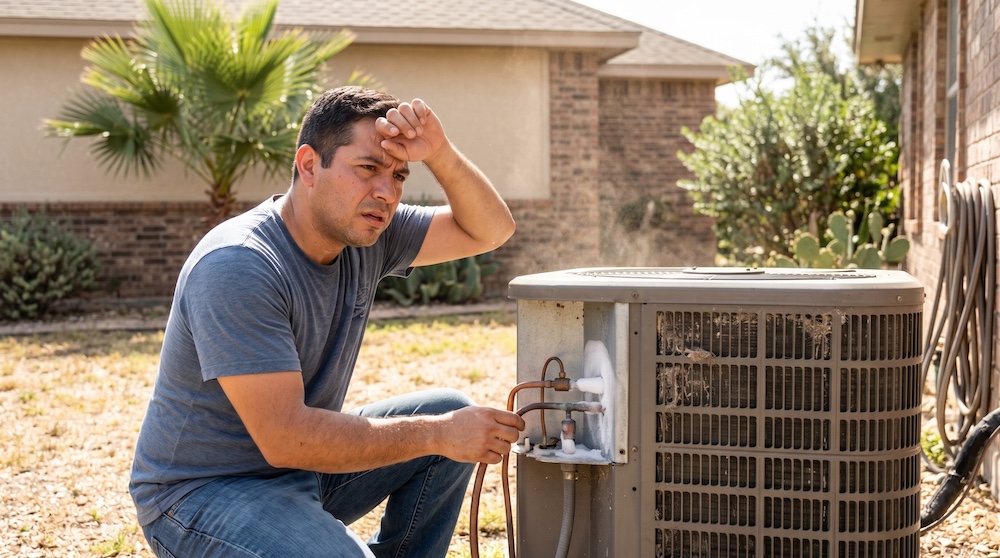
Living in McAllen means your air conditioner works harder than almost any AC in the country. From May through September, temperatures regularly climb into the 100s, and your system runs almost non-stop trying to keep up. That kind of workload takes a toll — and most AC systems don’t fail all at once. They warn you first.
The problem is, a lot of RGV homeowners ignore those warnings until the AC dies completely — usually on a Friday afternoon in July, with family in town and no same-day appointments available.
Here’s what to watch for so you’re not caught off guard.
Weak Airflow from the Vents
If you walk through your home and some rooms feel noticeably less cool than others, or the air coming out of your vents feels weak and sluggish, that’s worth paying attention to. It could be something simple like a clogged filter or a blocked vent — but it can also signal a failing blower motor, a deteriorating compressor, or ductwork problems that have gotten worse over time.
The key question to ask yourself: did this gradual, or did it happen suddenly? Gradual decline usually points to wear and tear on internal components. Either way, it’s not something to let sit.
Your AC Is Running But the Air Isn’t Cold
This one frustrates a lot of McAllen homeowners. The system sounds like it’s running fine — you can hear it outside, you can feel air coming through the vents — but the house just won’t cool down. You set the thermostat to 72 and it sits at 80 all afternoon.
This is often a refrigerant issue. AC systems don’t consume refrigerant the way a car burns gas — if the level is low, that almost always means there’s a leak somewhere in the system. Recharging refrigerant without fixing the leak is just a temporary fix. Depending on the age of your unit and the extent of the leak, repair may not be the most cost-effective path forward.
Energy Bills Climbing Every Month
If you’re doing a double-take at your AEP Texas bill each month, your AC might be the culprit. An aging or struggling system works harder to produce the same results — or worse, it can’t keep up at all and just runs continuously while your energy bill climbs.
Some increase in summer bills is normal for South Texas. But if your bill is noticeably higher than it was this same time last year, and nothing else in your home has changed, it’s time to have a technician take a look. You might be paying $50–$150 more every month for a system that’s already on its way out.
The System Short-Cycles (Turns On and Off Constantly)
A properly functioning AC runs in longer, steady cycles — it reaches the set temperature, shuts off, and then kicks back on when the home warms up again. If your system is turning on and off every few minutes, that’s called short-cycling, and it puts significant wear on the compressor.
Short-cycling can be caused by an oversized system, a refrigerant leak, a faulty thermostat, or electrical issues. In older units, it’s often a sign that the compressor is struggling — and compressor replacements on aging systems frequently cost more than a new unit.
Strange Noises You Didn’t Used to Hear
Banging, grinding, rattling, or a high-pitched squealing sound coming from your AC unit is never a good sign. These noises often indicate a loose or failing component — a fan blade that’s come loose, a failing motor bearing, or debris inside the unit.
Some noises are more urgent than others. Grinding metal-on-metal sound should prompt a same-day call. A rattling that only happens at startup might be less critical. But if your system is making sounds it wasn’t making last season, it’s worth having someone look before those sounds become a complete failure.
Your AC Is More Than 12–15 Years Old
In South Texas, AC systems age faster than in milder climates. The combination of extreme heat, long run times, and humidity puts more stress on components year-round. A system that might last 18–20 years in a northern climate often starts showing its age at 12–15 years here in the RGV.
If your system is in that range and you’re starting to see any of the signs above, it’s worth having a conversation about whether repair or replacement makes more financial sense. In many cases, the money you’d spend on repairs on an aging system would go further toward a new, efficient unit.
Frequent Repairs — You’re Calling Your Technician Every Season
One repair here and there is normal over the life of a system. But if you’re scheduling service calls every spring before summer hits, or calling for repairs mid-season, the cost of those visits adds up fast. A good rule of thumb: if a repair costs more than 50% of the price of a new system, and your unit is more than 10 years old, replacement is usually the smarter investment.
What to Do If Your AC Is Showing These Signs
Don’t wait until the system fails completely. Getting ahead of the problem means you can schedule a replacement on your timeline — not in a panic during the hottest week of the year.
Mission Air Conditioning serves McAllen and the surrounding Rio Grande Valley with honest diagnostics, transparent pricing, and same-day service when you need it most. If your AC is showing any of these warning signs, give us a call. We’ll tell you exactly what’s going on and what your best options are — no pressure, no upselling.
Call Mission Air Conditioning today to schedule a diagnostic visit, or explore your AC replacement options before your next South Texas summer.