

Spray foam insulation gets marketed with big claims, sometimes 30%, 40%, even 50% savings on energy bills. If you’re paying $300–$400/month in AEP Texas bills during RGV summers, those numbers get your attention fast.
But is it real? And is it worth the upfront cost?
The honest answer: yes, spray foam insulation can meaningfully reduce your AC costs in South Texas — but the savings depend on what you start with, where it’s applied, and how your home is built. Here’s what you need to know before making the decision.
Why Insulation Matters More in South Texas Than Elsewhere
In most climates, insulation is primarily about keeping heat in during winter. In South Texas, the equation flips: insulation keeps heat out during a summer that lasts 9–10 months.
Your attic is the biggest culprit. On a McAllen summer afternoon, an uninsulated or poorly-insulated attic can hit 140–160°F. That extreme heat radiates down through the ceiling into your living space, forcing your AC to work against not just the outdoor temperature but a baking attic above. Your AC is fighting on two fronts.
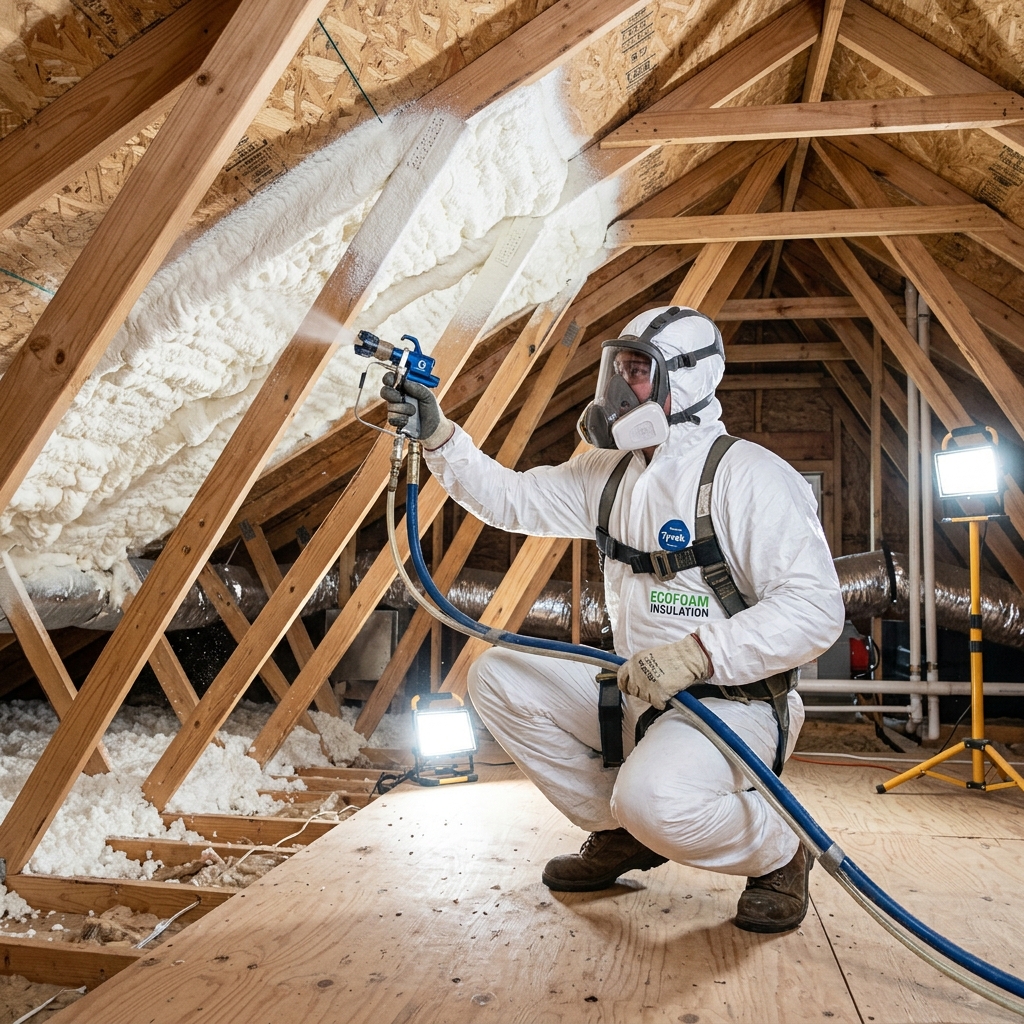
Spray foam insulation applied to the attic’s roof deck (rather than the floor) does something that fiberglass batts can’t fully accomplish: it seals the attic as a semi-conditioned space, dramatically reducing the heat load that transfers into your living area. It also air-seals simultaneously, which is the part that really moves the needle on electricity bills.
What’s Actually Driving Your High Electricity Bills
Before attributing high bills to insulation, it helps to understand the two separate problems insulation solves:
1. Heat transfer (insulation value): Without adequate insulation, heat flows from the hot attic and walls into your conditioned space. Your AC has to remove that heat.
2. Air leakage (air sealing): Homes naturally have gaps, usually around electrical boxes, plumbing penetrations, at the top plate where walls meet the attic. Conditioned air escapes through these gaps and hot outside air infiltrates. Air leakage can account for 25–40% of cooling energy in an older South Texas home.
Fiberglass insulation addresses heat transfer reasonably well. It does almost nothing about air leakage. Spray foam addresses both simultaneously, it insulates and air-seals in one application.
In many South Texas homes, especially those built before the 1990s, air leakage is the bigger driver of high bills. Addressing it can produce larger savings than the R-value alone would suggest.
Realistic Savings: What to Expect
Studies from the Department of Energy and independent testing consistently show that air sealing + insulation upgrades in hot climates can reduce cooling energy use by 15–30% in most homes. High-quality closed-cell spray foam in an attic, combined with the air sealing effect, often lands in the 20–35% range for homes that started with inadequate insulation.
What that means in dollars depends on your baseline:
| Monthly AEP Bill (Summer) | 25% Reduction | 30% Reduction |
|---|---|---|
| $200/month | $50/month saved | $60/month saved |
| $300/month | $75/month saved | $90/month saved |
| $400/month | $100/month saved | $120/month saved |
At $75–$100/month in savings (a reasonable middle-ground estimate for a higher-bill RGV home), you’re looking at $900–$1,200/year. A typical attic spray foam job in McAllen might run $2,500–$5,000 depending on attic size and access. That puts payback in the 2–5 year range, not immediate, but genuinely solid as home improvements go.
The returns are better when:
- Your current insulation is thin or degraded (very common in older RGV homes)
- Your home has significant air leakage (most older homes do)
- You’re running your AC hard for 10+ months of the year
- Your AEP bills are already high
Where Spray Foam Has the Biggest Impact
Attic roof deck (unvented attic): The highest-impact location for most McAllen homes. Converts the attic from an unconditioned hot zone to a semi-conditioned buffer space. Ducts running through the attic become dramatically more efficient because they’re no longer surrounded by 150°F air.
Crawl space or slab perimeter: Less common in the RGV (most homes are slab-on-grade), but important where it applies.
Wall cavities: Beneficial in new construction; retrofitting walls of existing homes is expensive and usually not worth it unless doing a major renovation.
What Spray Foam Doesn’t Do
Spray foam insulation isn’t a fix for an AC system that’s undersized, poorly maintained, or failing. If your system has a refrigerant leak or a dirty coil, insulation won’t overcome that. The right order is:
- Make sure your AC is properly maintained and functioning well
- Then address the building envelope (insulation, air sealing) to reduce the load on that system
A properly-sized, well-maintained AC in a well-insulated home is the combination that produces the lowest bills and the best comfort.
Frequently Asked Questions
Is spray foam worth it in South Texas if my home is newer?
It depends on what insulation is already installed. Many newer RGV homes still use fiberglass batts in the attic, which have limited air-sealing benefit. Spray foam can still make a meaningful difference. An energy audit or insulation inspection can tell you where the gaps are.
How long does spray foam insulation last?
Closed-cell spray foam is extremely durable, it can last 80+ years without significant degradation. You’re not looking at re-insulating in 10–15 years the way you might with fiberglass.
Does spray foam affect my AC warranty?
Spray foam itself doesn’t affect your AC warranty, it affects your home’s building envelope. If anything, reducing the heat load on your system can extend equipment life by reducing runtime hours.
What type of spray foam is best for South Texas attics?
Closed-cell spray foam is generally the better choice for the RGV, it has higher R-value per inch, provides a vapor barrier, and is more resistant to the humidity and temperature extremes of the Rio Grande Valley climate. See our comparison of open-cell vs. closed-cell spray foam for a full breakdown.
The Bottom Line
Spray foam insulation does legitimately reduce AC costs in South Texas, and the RGV is actually one of the best climates in the country to see a return on that investment, because your AC runs so long and your baseline bills are high. Realistic savings of 20–35% on cooling costs, with payback timelines of 2–5 years, make it a solid investment for most McAllen homeowners who are starting from inadequate insulation.
The key is understanding what you’re starting with. An honest assessment from an insulation contractor can tell you whether your current insulation is the problem, or whether the issue is elsewhere.
Interested in spray foam for your RGV home? Mission Air Conditioning installs spray foam insulation in McAllen and surrounding areas. We’ll assess your attic and give you a straight picture of what to expect, no inflated promises. Request a free consultation or give us a call.