

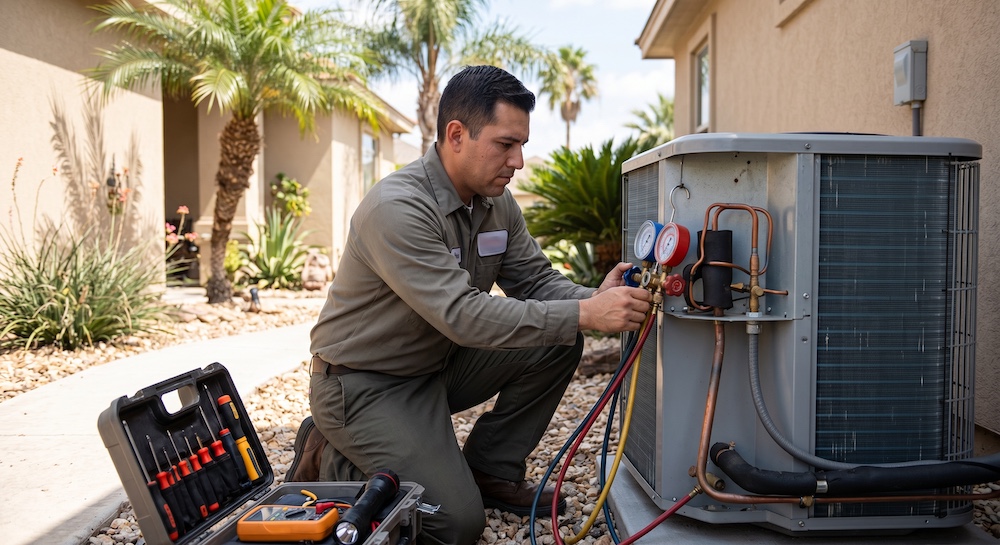
If you’ve ever called for an HVAC tune-up and had a technician in and out of your home in under 30 minutes, you probably didn’t get a real tune-up. A genuine preventive maintenance visit for an AC system — the kind that actually extends your equipment life, catches problems before they become breakdowns, and keeps your system running efficiently — takes longer than that. It also involves more than just checking the thermostat and calling it done.
This is the checklist McAllen homeowners should expect from a thorough HVAC tune-up, and what each item actually does for your system.
Why Tune-Ups Matter More in South Texas
In most of the country, HVAC tune-ups are recommended once a year, usually in spring before the cooling season starts. In the Rio Grande Valley, where your AC might run 10 months out of the year, twice-annual service makes more sense — once in late winter before the heavy summer load begins, and once in fall after the peak demand has passed.
The South Texas climate puts more stress on AC components. Dust, pollen, and humidity accelerate wear on coils and motors. Extreme heat pushes compressors harder than they’d ever work in a milder climate. A system that gets maintained regularly simply lasts longer and costs less to operate than one that only gets looked at when something goes wrong.
What a Thorough HVAC Tune-Up Should Include
Refrigerant Level Check
A technician should measure refrigerant pressure and verify that levels are within the manufacturer’s specification. Low refrigerant almost always indicates a leak — so if levels are off, the next step is finding and fixing the leak, not just topping it off.
Electrical Connections and Voltage Check
All electrical connections in the unit should be inspected and tightened. Loose connections can cause system failures and are a safety concern. The technician should also check voltage and amperage on motors to confirm they’re operating within spec.
Capacitor Testing
Capacitors are one of the most common parts to fail in South Texas AC systems, particularly after a heavy summer. They provide the startup power jolt for the compressor and fan motors. A technician should test capacitor readings with a multimeter — capacitors that are weakening but haven’t failed yet are worth replacing before they cause an unexpected breakdown.
Thermostat Calibration and Operation Check
The technician should verify that the thermostat is reading accurately and communicating correctly with the unit. A thermostat that’s off by even a few degrees can cause the system to cycle incorrectly, wasting energy and reducing comfort.
Evaporator Coil Inspection and Cleaning
The evaporator coil (located in the indoor air handler) picks up heat and humidity from the air inside your home. Over time, it can accumulate dust and biological growth that reduces its ability to transfer heat efficiently. The technician should inspect the coil and clean it if needed.
Condenser Coil Cleaning
The condenser coil in the outdoor unit releases that heat to the outside. In South Texas, it gets coated with dust, pollen, cottonwood fibers, and other debris that insulates the coil and makes it harder for the system to shed heat — which reduces efficiency and puts stress on the compressor. A proper tune-up includes rinsing the condenser coil.
Blower Motor and Fan Inspection
The blower motor and fan assembly should be inspected for wear, cleaned, and lubricated if applicable. A dirty or unbalanced blower wheel reduces airflow significantly — which reduces cooling capacity and efficiency.
Air Filter Replacement or Inspection
The technician should check the filter and replace it if needed. If you use a standard 1-inch filter, these should ideally be replaced monthly during heavy use periods. A technician doing a tune-up should either replace it or confirm you understand the service interval.
Drain Line Flush
In South Texas humidity, the condensate drain line — which removes moisture collected by the evaporator coil — can develop algae growth that leads to blockages. A blocked drain line can cause water damage to your air handler or cause the system to shut down on a safety float switch. Flushing the drain line is a standard part of any complete tune-up.
Overall System Performance Test
After all the above, the technician should run the system through a complete cycle, measure supply and return air temperature differential (the “delta T”), and confirm the system is cooling at its designed efficiency. This is how you know whether all the components are working together as they should.
How Long Should a Proper Tune-Up Take?
A thorough tune-up — covering everything on this list — typically takes 45 minutes to an hour and a half, depending on the system’s condition and whether anything needs cleaning or adjustment. If a technician is wrapping up in 20 minutes, they’re not getting through all of this.
What’s NOT Part of a Tune-Up
A preventive tune-up is a maintenance visit — it’s not a repair. If the technician finds an issue during the tune-up (a failing capacitor, a developing refrigerant leak, a worn belt), that’s a separate conversation about repair options. A legitimate technician will explain what they found, why it matters, and what it will cost to address — before doing any additional work.
The Difference Between a Real Tune-Up and a Rushed One
Here’s what distinguishes a quality maintenance visit from one that’s more about collecting a service fee:
- The technician spends adequate time (45+ minutes) on the system
- They physically clean coils, not just inspect them
- They test electrical components with actual instruments (multimeter, capacitor tester)
- They check refrigerant levels with gauges
- They walk you through what they found before leaving
A trustworthy HVAC company will tell you what they did, what they found, and what they’d recommend — without pressuring you into repairs you don’t need today.
Schedule Your HVAC Tune-Up Before South Texas Summer
The best time to get your system checked is before you need it most. An early spring tune-up catches problems in time to fix them before the heat is on — literally.
Mission Air Conditioning provides comprehensive HVAC maintenance for McAllen and RGV homeowners. Our technicians work through a complete checklist, explain what they find, and give you clear options without the pressure.
Learn about how common maintenance mistakes can shorten your system’s life — and how a regular tune-up protects your investment.
Call Mission Air Conditioning today to schedule your HVAC tune-up or ask about our maintenance plan options.