

A lot of McAllen homeowners are spending more on air conditioning than they need to — and they don’t know it. They assume the high summer energy bills are just a fact of life in South Texas, or that the rooms that never quite cool down are just what you deal with when it’s 105°F outside.
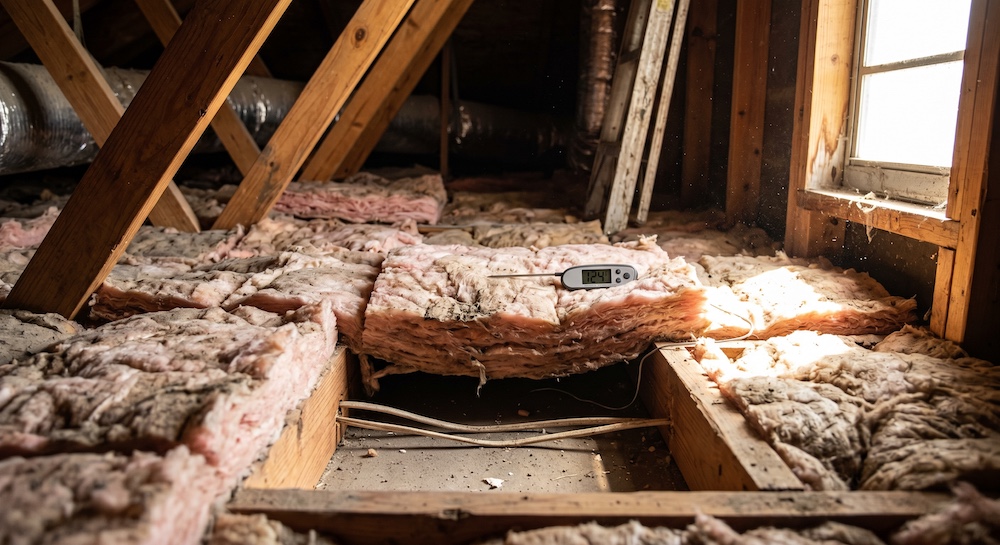
Sometimes, that’s true. But often, the root cause is insulation that isn’t doing its job. And the frustrating part is that poor insulation is one of those problems you don’t see — it’s hidden in your walls, attic, and crawlspace, quietly driving up your energy bills and making your AC work harder than it should.
Here are the signs that your home’s insulation may be the culprit, and why spray foam insulation is worth considering for South Texas homes specifically.
Your Energy Bills Are Higher Than They Should Be
This is the symptom that gets most homeowners’ attention. If your AEP Texas bill during the summer months seems disproportionately high compared to similar homes in your area, or if it’s been creeping up year over year even though your habits haven’t changed, that’s worth investigating.
There’s a simple thought experiment: if your AC runs for 12 hours a day trying to maintain 72°F, and your home’s insulation is allowing significant heat infiltration from the attic or walls, your system is essentially fighting a battle it can never fully win. Improving the insulation reduces that heat load, which means the AC runs less, and your bill drops.
Energy bills alone don’t prove an insulation problem — your AC system’s age and efficiency, window quality, and other factors also matter. But if your HVAC system has been checked out and is running properly, and your bills are still high, insulation is worth a serious look.
Some Rooms Are Always Hotter Than Others
If there’s a room in your home — or a whole floor — that never gets as cool as the rest of the house no matter how long the AC runs, uneven insulation is one of the most common causes.
In South Texas homes, this shows up most often in:
- Rooms directly below the attic: If the attic above a bedroom or living room is poorly insulated or has gaps, that room absorbs heat from above all day. The AC may be running properly everywhere else, but that room stays 5–8°F warmer than the rest of the house.
- Rooms on the west side of the house: West-facing walls take direct afternoon sun in the summer. If wall insulation is thin, absent, or has settled, those rooms absorb and retain heat differently than the rest of the house.
- Additions: Rooms added to a home after original construction often have different (and sometimes lower-quality) insulation than the original structure.
Your AC Runs Constantly but Can’t Keep Up
An air conditioner that runs almost non-stop during peak summer days isn’t always a sign that the AC itself is failing. Sometimes it’s a sign that the heat load in the home is simply too high — more heat is entering the home through the building envelope than the AC can remove, even when running at full capacity.
In South Texas, this heat load comes from three sources: solar gain through windows, heat conducted through walls and the roof, and hot air infiltrating through gaps and cracks. Good insulation addresses the last two significantly. Spray foam, because it seals air infiltration in addition to slowing conduction, addresses both at once.
If your AC has been serviced recently and is mechanically sound but still can’t keep the house comfortable on the hottest days, getting an insulation assessment is a logical next step.
You Can Feel Drafts or Temperature Variations Near Walls and Ceilings
Run your hand along the top of an interior wall on a hot day. Or stand in front of a wall that faces west in the late afternoon. Do you feel warmth radiating off the surface? In a well-insulated home, interior surfaces should stay closer to the interior temperature rather than reflecting the outdoor conditions.
Drafts near electrical outlets, baseboards, or where walls meet the ceiling can also indicate air infiltration points — places where hot outside air is finding its way in through gaps that insulation hasn’t sealed.
Your Home Was Built Before the Mid-1990s
Insulation standards for residential construction have improved significantly over the decades. Homes built before the mid-1990s — and especially those built in the 1970s and 1980s — often have insulation that meets the code standards of the time but falls significantly short of what’s available today.
In McAllen’s climate, attic insulation is particularly critical. Many older homes in the RGV were built with minimal attic insulation by modern standards. Adding spray foam to an older home’s attic can be one of the highest-return home improvement investments available — reducing energy bills, improving comfort, and reducing strain on the HVAC system.
Your Attic Temperature Is Extreme
If you’ve ever stepped into your attic during a South Texas summer, you know: it can reach 150°F or higher on a hot day with direct sun. That heat radiates down through the floor of the attic (the ceiling of your living space) all day long, constantly adding to your home’s cooling load.
An unvented attic with spray foam applied directly to the roof deck changes this dramatically. Rather than letting the attic bake in the summer sun and then slowly releasing that heat into the house, a properly foam-insulated attic stays much closer to indoor temperatures — dramatically reducing the amount of heat that transfers into your living space.
What to Do Next
If you’re seeing more than one of these signs, it’s worth having a professional assessment of your home’s insulation. The evaluation should look at your attic coverage, wall insulation, and key air infiltration points to give you a clear picture of what’s happening and what the options are.
For South Texas homes specifically, spray foam generally outperforms fiberglass insulation in the areas that matter most — air sealing, moisture resistance, and performance in extreme heat. Whether it makes sense for your home depends on your specific situation, your budget, and what you’re hoping to accomplish.
Mission Air Conditioning provides spray foam insulation services for McAllen and the Rio Grande Valley. We’ll assess your home honestly and give you a clear picture of what would actually make a difference — without overselling a solution that’s more than you need.
Call Mission Air Conditioning today to schedule a home insulation assessment in McAllen or anywhere in the RGV.