

Your air conditioner is one of the hardest-working appliances in your McAllen home. Between the extreme heat, the long season, and the humidity, it puts in more hours than most systems in the country. And yet, a lot of the things that shorten AC lifespans in the RGV aren’t equipment failures — they’re habits.
Here are the most common HVAC maintenance mistakes South Texas homeowners make, why they matter more here than in a milder climate, and what to do instead.
Skipping the Annual (or Semi-Annual) Tune-Up
This is the biggest one. A lot of RGV homeowners run their AC for years without a professional maintenance visit — and then wonder why their system failed at 10 years instead of 15.
In South Texas, skipping maintenance isn’t just inconvenient — it’s expensive. Systems that don’t get regular tune-ups accumulate small inefficiencies that compound over time: dirty coils that make the compressor work harder, low refrigerant from slow leaks that go undetected, capacitors that are failing but haven’t quit yet. Each of these issues quietly chips away at system life and energy efficiency.
The fix: Get your system serviced at least once a year, ideally in late winter before summer hits. Because the RGV cooling season runs so long, twice a year is even better. Here’s exactly what a thorough tune-up should include.
Not Changing the Filter Regularly
This is the most common — and most easily avoided — mistake. A clogged air filter restricts airflow through the system, which causes the evaporator coil to work harder, can lead to the coil freezing, and forces the blower motor to draw more power to move the same amount of air.
In South Texas, this problem is worse than in most places. The combination of dust, pollen, pet dander, and the constant cycling of the AC during a long season means filters fill up faster. A filter that might last two months in a northern home may need replacing every three to four weeks here during peak season.
The fix: Check your filter monthly. Set a reminder. For a standard 1-inch filter in an average McAllen home running heavily, plan on replacing it every 3–4 weeks during summer and every 4–6 weeks in the milder months. If you have pets, adjust accordingly.
Blocking or Closing Too Many Vents
It seems logical: if you’re not using the guest room, why not close the vent and redirect that cool air somewhere else? Unfortunately, that’s not how residential HVAC works.
Your AC system is sized and designed to distribute air to a specific number of supply points at a specific pressure. When you close vents, you increase the static pressure in the duct system. That forces the blower to work harder, can cause ductwork to leak at weak points, and reduces overall efficiency. In some cases it can also cause the evaporator coil to freeze.
The fix: Keep all vents open throughout the home. If certain rooms are consistently too warm or too cold, that’s a balance issue worth having a technician look at — not a problem to solve by shutting off vents.
Ignoring the Condensate Drain
The condensate drain line removes the moisture your AC pulls from the indoor air. In McAllen and the RGV, where humidity is a significant factor, your system may remove several gallons of water from the air per day during summer. All of that water flows through the drain line.
The problem: algae and mold grow in that damp, dark drain line, and over time they form blockages. A blocked drain line can cause water to back up into the air handler, resulting in water damage to the unit, your ceiling, or your walls. Many systems also have a safety float switch that will shut the system off when the drain backs up — which means your AC stops working on a hot summer day for a reason that has nothing to do with the AC itself.
The fix: Have the drain line flushed as part of your annual tune-up. Between visits, pouring a cup of diluted bleach or white vinegar into the drain line access point every few months can help prevent algae growth.
Neglecting the Outdoor Unit
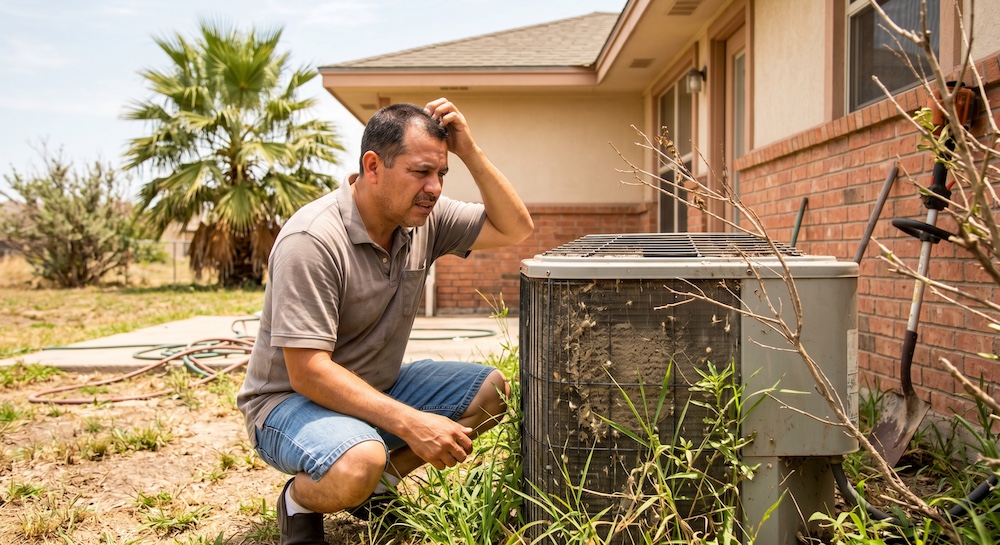
The outdoor condenser unit does its job hidden behind the house, usually forgotten until something goes wrong. In South Texas, this unit is exposed to extreme heat, UV radiation, dust, pollen, cottonwood, and the occasional storm debris.
When the condenser coil — the fins that surround the unit — gets coated with debris, the unit can’t shed heat efficiently. This forces the compressor to work harder and run hotter, which shortens its lifespan. Landscape debris, overgrown plants, or fencing that restricts airflow around the unit compound the problem.
The fix: Keep a two-foot clearance around the outdoor unit. Rinse it down with a garden hose a couple times a year to remove surface debris. Don’t plant shrubs or stack anything against it. Have the coil professionally cleaned during your tune-up.
Waiting Until Something Breaks to Call
In South Texas, this is the most costly mistake of all. Many AC failures — particularly compressor failures, which are the most expensive component in the system — are preceded by warning signs that a trained technician would catch during a routine visit. Low refrigerant, a failing capacitor, a struggling motor: these are all detectable problems that, if caught early, lead to affordable repairs. Left until failure, they can result in a completely dead system in the middle of July.
The fix: Don’t wait for a breakdown. Schedule maintenance before it’s hot. If your system is making new sounds, struggling to cool on days that aren’t that extreme, or your energy bills are climbing without explanation, call sooner rather than later.
Running the AC on a Clogged or Dirty System
Combining several of the above — a dirty filter, a coated condenser coil, blocked drain — means the system is running under strain constantly. The compressor, which is the most expensive component to repair or replace, is particularly vulnerable to damage from running in a stressed state over an extended period.
The fix: Maintenance isn’t just about preventing inconvenient breakdowns. In South Texas, it’s about protecting a significant financial investment. A well-maintained AC system in the RGV can last 15+ years. One that gets no maintenance often struggles to reach 10.
Mission Air Conditioning Maintenance Plans
At Mission Air Conditioning, we make it easy for McAllen homeowners to stay on top of HVAC maintenance. Our maintenance plans include regular tune-ups, priority service scheduling, and the peace of mind that comes from knowing your system has been looked at by someone who knows it.
Because in South Texas, your AC isn’t a luxury — it’s a necessity.
Call Mission Air Conditioning today to ask about our maintenance plans or to schedule a tune-up before summer arrives.