

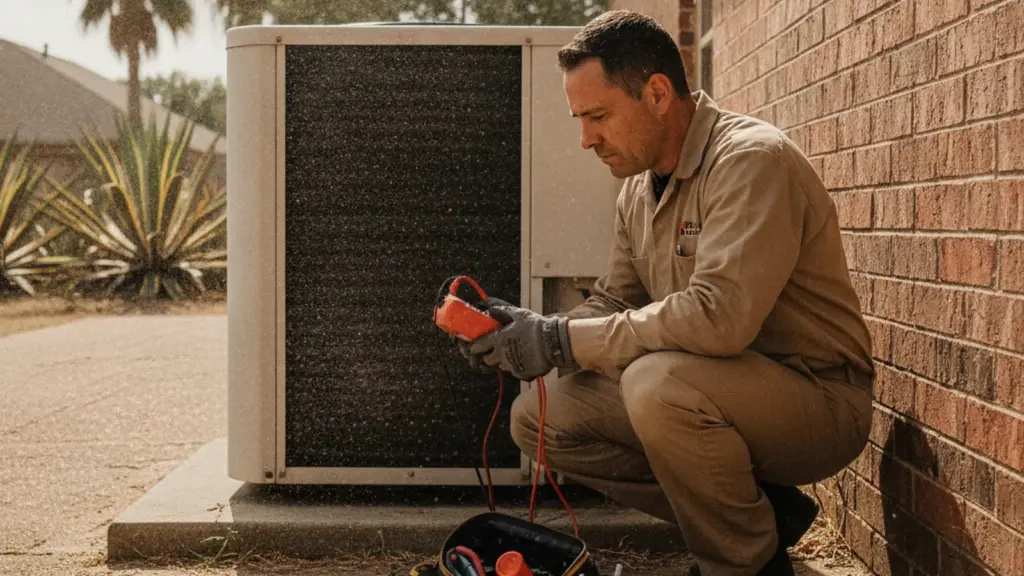
Not every AC problem is a crisis, and not every one is a quick fix either. Before you brace for a big bill, or assume something could be a minor fix when it isn’t, it helps to know the general signals that separate the two. This isn’t a substitute for an actual diagnosis, but it’ll give you a realistic sense of what you’re probably dealing with before a technician shows up.
Signs That Usually Point to a Quick Fix
The system still runs, just not quite right. Slightly weaker airflow, a minor temperature lag, or a thermostat that seems a little off often point to something simple: a dirty filter, a thermostat setting, or a minor electrical component.
It just started, and nothing else changed. A brand new noise or symptom with no other changes to the system usually has a single, identifiable cause rather than a cascading failure.
The fix is something you can partially diagnose yourself. If checking the thermostat, swapping the filter, or confirming the breaker didn’t trip resolves it or narrows it down significantly, you’re likely in quick-fix territory.
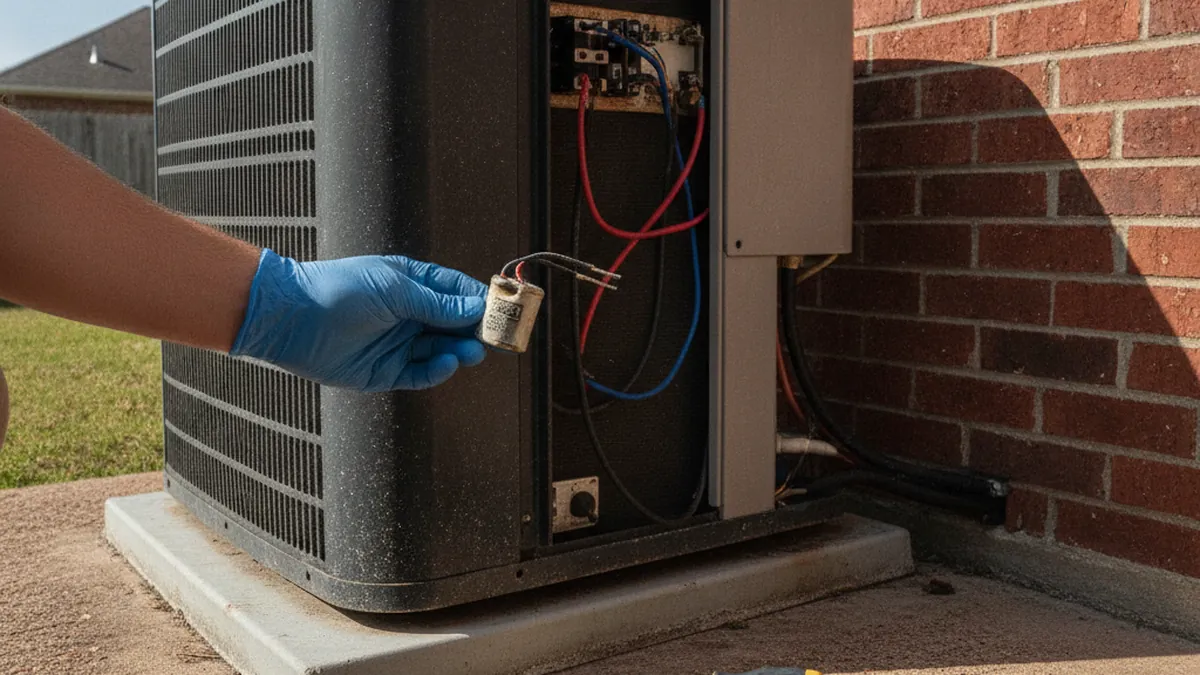
Signs That Usually Point to Something Bigger
Ice on the lines or the indoor unit. This can be simple (a dirty filter causing airflow restriction) or it can point to a refrigerant leak, which is a more involved repair.
Grinding, screeching, or loud clanking from the outdoor unit. These sounds usually mean a mechanical component is failing, not something to wait on.
A burning smell or visible electrical damage. This is not a “wait and see” situation. Turn the system off and call us immediately.
The system is short-cycling repeatedly. Turning on and off in quick succession points to an underlying issue, this isn’t something to just let go and hope it resolves itself.
It still runs constantly but never actually cools the house. This usually means the system is compensating for a real problem rather than doing its job normally.
Why Guessing Wrong in Either Direction Costs You
Assuming something minor is fine when it isn’t (running the system through visible warning signs, for example) tends to turn a moderate repair into a bigger one, sometimes into a full replacement. Assuming something is a crisis when it’s actually simple can mean paying rush fees or agreeing to unnecessary work out of anxiety rather than facts.
The safest move when you’re not sure: call for an honest diagnostic rather than guessing either direction yourself. If you’re also trying to figure out which company to trust with that diagnosis, here’s what separates a trustworthy AC repair company from one that’s going to push you toward the bigger, more expensive option regardless of what’s actually wrong.
Frequently Asked Questions
Is it ever okay to wait a day or two before calling?
If the system is still cooling reasonably well and none of the serious warning signs apply, waiting a day to schedule a convenient appointment is usually fine. If it’s not cooling at all, or you’re seeing serious warning signs, don’t wait.
Can a quick fix become a bigger repair if I ignore it?
Yes, this is one of the more common ways a simple issue turns expensive. A clogged filter causing coil freeze, left unaddressed, can eventually strain the compressor.
Will a technician tell me if it’s a simple fix?
A trustworthy one will. That’s exactly the kind of company worth finding before you need one urgently.
The Bottom Line
Most AC problems fall somewhere on a real spectrum between “quick fix” and “bigger repair,” and the signals above will get you a reasonable read before anyone shows up. When you’re genuinely unsure, an honest diagnostic beats guessing in either direction.
Not sure what you’re dealing with? Schedule a diagnostic visit with Mission Air Conditioning, and we’ll tell you plainly what’s actually wrong.