

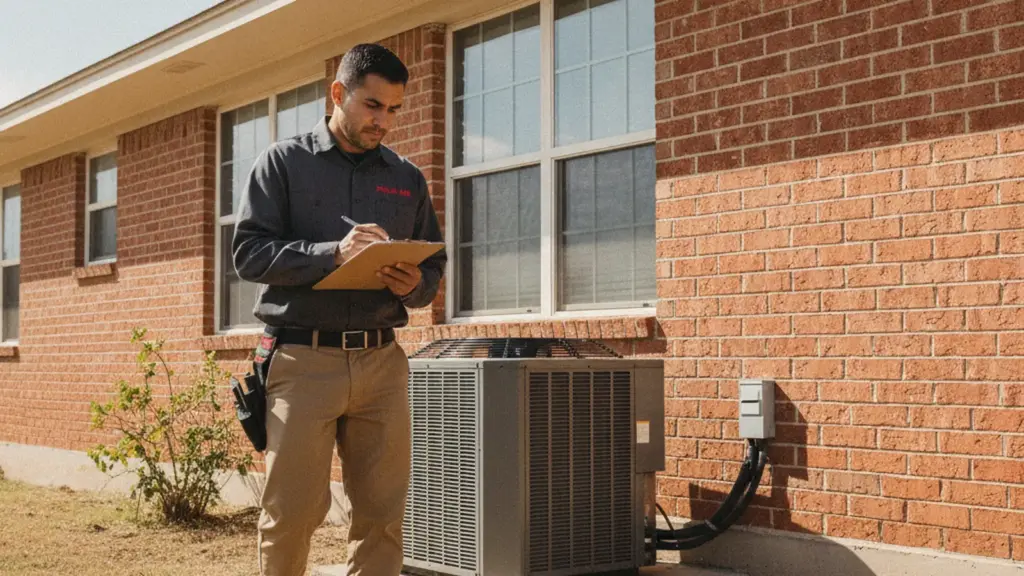
Some companies size an AC replacement simply by looking up your square footage, matching it to a chart, and done. In McAllen, that shortcut can cost you either way. Too small, and the system runs constantly without ever quite keeping up during peak summer. Too big, and it short-cycles, cools unevenly, and struggles with humidity, on top of costing more upfront than you needed to spend.
Here’s what helps to determine the right size, and why a professional load calculation beats a square-footage guess every time.
Why Square Footage Alone Doesn’t Work
Two McAllen homes with identical square footage can need noticeably different AC systems. What changes the math:
Insulation quality. An older home with minimal attic insulation loses cooled air faster than a newer, well-insulated one, even at the same size.
Window count and orientation. A house with large west-facing windows takes on far more afternoon heat load than one with fewer windows or better shading.
Ceiling height. Higher ceilings mean more air volume to cool, which a flat square-footage number doesn’t account for.
Ductwork conditions. Leaky or poorly insulated ductwork in a hot attic loses cooling capacity before it ever reaches your vents, which affects what size system is actually needed to compensate.
Local climate. McAllen’s heat and humidity are more demanding than a generic national sizing chart assumes.
What a Load Calculation Accounts For
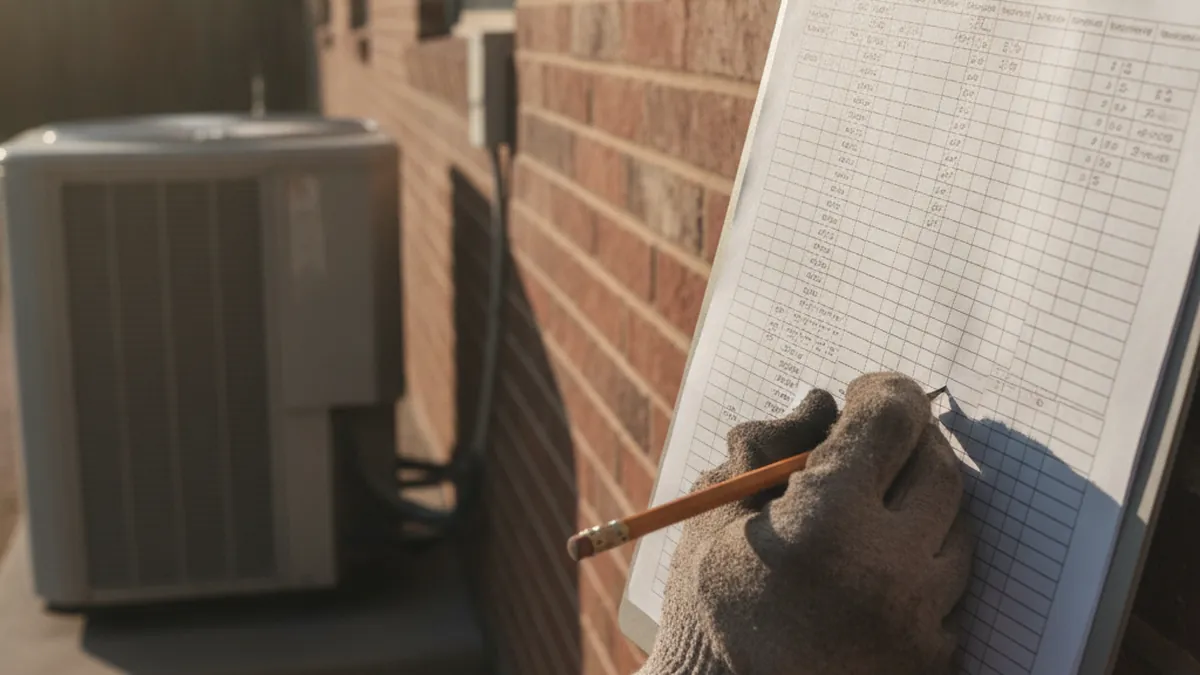
A proper sizing process (commonly called a Manual J load calculation) factors in your home’s square footage alongside insulation levels, window area and orientation, ceiling height, air leakage, and local climate data specific to the Rio Grande Valley. The output is a precise cooling load in BTUs.
This matters because both an undersized and an oversized system can create other problems:
Undersized: This means that the system runs constantly, never fully satisfies the thermostat on the hottest days, and wears out faster from the extra strain.
Oversized: Means that the system cools the air quickly without running long enough to properly remove humidity, leading to that clammy feeling even when the temperature reads fine, plus more wear from frequent short cycling.
Frequently Asked Questions
Can I just size up to be safe?
No, oversizing causes other problems of its own, particularly with humidity control in a climate like McAllen’s. Bigger isn’t automatically better.
Does a load calculation cost extra?
It should be typically included as part of a proper replacement quote from any company that does the job right. If a contractor is only asking your square footage before quoting a system size, that’s worth questioning.
How does this affect what I pay?
The right-sized system avoids both the higher upfront cost of an oversized unit and the higher long-term energy and repair costs of an undersized one running constantly. It also affects financing, since total system cost is one of the main things that determines your monthly payment.
The Bottom Line
The right AC size for your McAllen home comes from a real load calculation. It’s the difference between a system that quietly does its job for the next 15 years and one that’s fighting an uphill battle from day one.
Not sure what your home actually needs? Schedule a consultation with Mission Air Conditioning, and we’ll run the numbers properly before recommending anything.