

Replacing your AC is one of the larger investments you’ll make for your home. Knowing what the process actually looks like takes the stress out of it and helps you spot a quality installation versus a cut-rate one.
Here’s a walkthrough of what a proper AC installation looks like in McAllen, from the first visit to the final walkthrough.
Step 1: The Assessment
A reputable HVAC company doesn’t show up with a unit and start installing. The first step is a proper assessment of your home, specifically, a load calculation (technically called a Manual J).
A load calculation determines how much cooling capacity your home actually needs based on square footage, ceiling height, insulation levels, window orientation, and sun exposure. In McAllen, where west-facing walls take brutal afternoon sun and attic insulation is often minimal, this step matters.
A company that skips the load calculation and just replaces your old unit with the same size is taking a shortcut. An oversized unit short-cycles, fails to dehumidify, and wears out faster. An undersized unit runs constantly and never cools the house properly. Sizing it right from the start is one of the most important things an installer does.
Step 2: Equipment Selection
Once the load calculation is done, your installer should present you with equipment options, typically two or three systems at different efficiency tiers. In South Texas, where your AC runs 10+ months a year, the efficiency conversation matters. Higher SEER2 ratings mean lower monthly bills, and the payback period on a more efficient unit is faster here than in cooler climates because of the extended runtime.
You can read more about choosing the right unit for your home to understand what the SEER2 differences mean for your electric bill.
Step 3: Installation Day
A typical residential AC installation in McAllen takes 4–8 hours for a standard replacement. More complex jobs, problematic ductwork, electrical upgrades, multi-zone setups, might take longer. Here’s what should happen during the installation.
Removal of the old system
The old outdoor unit (condenser), indoor unit (air handler or coil), and refrigerant lines are disconnected and removed. Refrigerant must be recovered properly since venting it is illegal under EPA regulations.
Ductwork inspection
Before the new system goes in, a good installer checks your ductwork for leaks, undersized sections, or damage. Duct leaks in attics are common in South Texas homes and can undermine the performance of even a brand-new system. Any issues found should be disclosed to you before work continues.
Installation of the new equipment
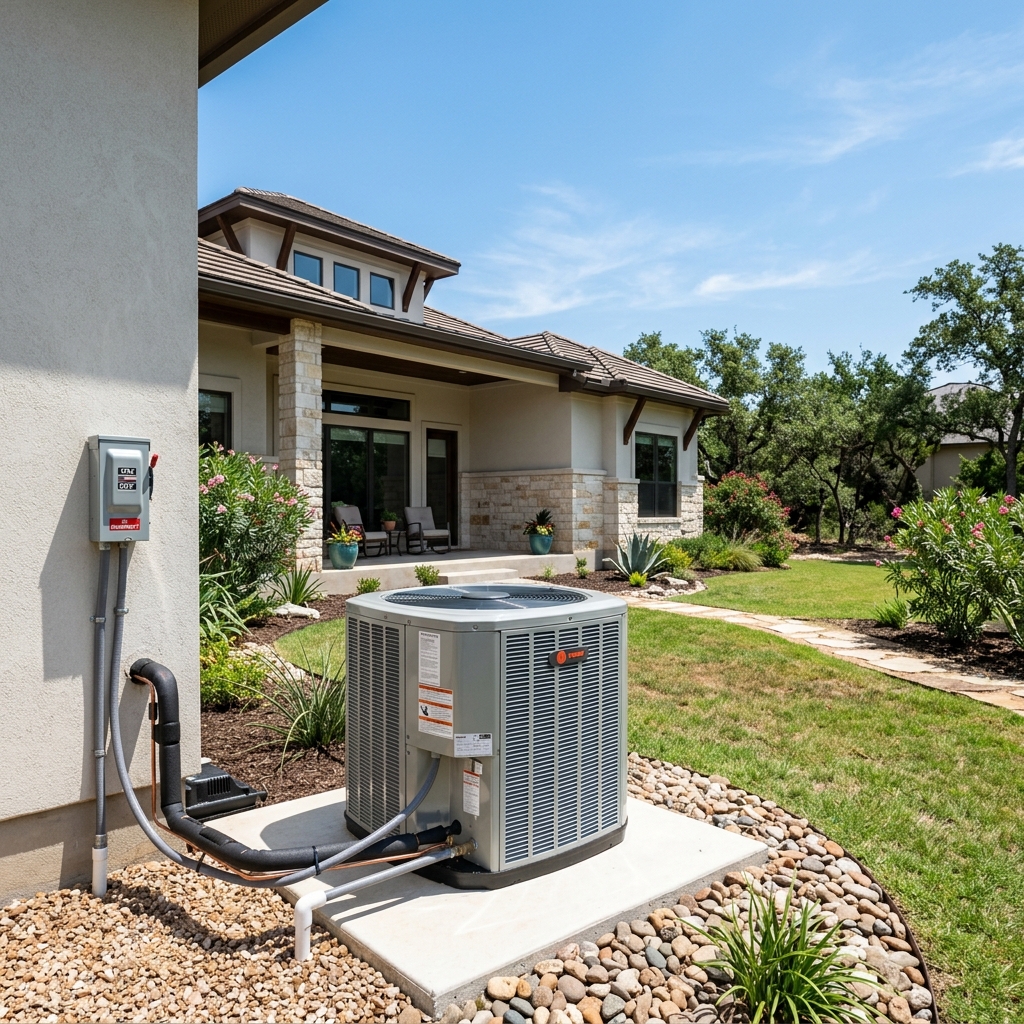
The new air handler goes inside, and the new condenser unit is set outside on a pad. Refrigerant lines are connected, and the electrical disconnect and thermostat are wired in.
Refrigerant charging
This is where a lot of shortcuts happen. The system needs to be charged to the manufacturer’s exact specifications. A tech should use gauges to measure suction and discharge pressures and verify the charge is correct before the job is done. An improperly charged system will underperform and may fail prematurely.
System commissioning
Once everything is connected, the tech runs the system through a startup sequence checking airflow at every vent, measuring supply and return air temperatures to verify the correct temperature drop, and confirming the thermostat communicates correctly.
What a Quality Installation Looks Like vs. a Cut-Rate One
The difference between a proper installation and a rushed one isn’t always visible from the outside. Here’s how to tell.
| Quality Installation | Cut-Rate Installation | |
|---|---|---|
| Sizing | Load calculation performed before equipment is ordered | Same-size unit ordered without assessment |
| Ductwork | Inspected, issues documented | Untouched regardless of condition |
| Refrigerant | Charged to spec, verified with gauges | “Topped off” by feel |
| Commissioning | Airflow and temperature measurements taken | Powered on, cooled the house, installer leaves |
| Walkthrough | Full explanation before departure | No documentation, no walkthrough |
What AC replacement typically costs in McAllen varies, but the cheapest quote isn’t always the best value if the installation quality isn’t there.
Step 4: The Walkthrough
Before the crew leaves, you should get a walkthrough covering what was done, where the new equipment is, how to operate the thermostat, the filter replacement schedule, and what the warranty covers. Both the manufacturer’s warranty and the installer’s labor warranty should be explained clearly.
If an installer finishes and leaves without a walkthrough, that’s a flag to watch out for.
Frequently Asked Questions
How long does AC installation take in McAllen?
Most standard residential replacements take 4–8 hours in a single day. If there’s significant additional work like ductwork repairs, electrical upgrades, it may run into a second day. But that should be communicated upfront before work starts.
Do I need to be home during the installation?
Yes, for the walkthrough at minimum. It’s also a good idea to be available throughout the day in case the installer has questions about duct access, thermostat location, or other decisions that come up during the job.
What warranty should I expect on a new AC in McAllen?
Equipment manufacturers typically offer 5–10 year parts warranties, sometimes longer on certain components. A reputable contractor will also offer a labor warranty, usually 1–2 years. Make sure both are spelled out in writing before work starts.
Will a new AC immediately cool my house better?
Most homeowners notice an improvement immediately, especially if the old system was failing or undersized. If your old system had duct leaks that were identified and repaired during installation, the difference can be dramatic.
Ready to Move Forward?
If you’re seeing signs your current system is failing and want to understand what the replacement process looks like for your specific home, Mission Air Conditioning offers free AC replacement assessments in McAllen and throughout the Rio Grande Valley. No pressure, just a straight conversation about what your system needs. Reach out at missionaircon.com or give us a call.