

In South Texas, your AC runs harder and longer than almost anywhere else in the country. Ten to eleven months of operation, temperatures above 100 degrees for weeks at a time, and humidity spikes that push the system to work overtime. The stakes of neglected maintenance are higher here than in most climates.
So what actually happens when you skip the annual tune-up? Here’s the honest breakdown.
Nothing (At First)
Skipping one tune-up probably won’t cause an immediate problem. HVAC systems don’t fail the day after a missed maintenance appointment. This is part of why people skip — nothing obviously goes wrong right away, and it’s easy to conclude the tune-up wasn’t necessary.
The effects of deferred maintenance show up gradually, and by the time they’re visible, they’ve already been costing you money for months.
Your Energy Bill Creeps Up
This is the first place most homeowners notice the impact. When a system isn’t properly tuned, its efficiency declines. Dirty evaporator coils, low refrigerant, loose electrical connections, and a poorly calibrated system all force the equipment to run longer to achieve the same cooling. In the RGV, where your AC drives a significant portion of your AEP Texas bill, even a 10 to 15% efficiency decline adds up to real money over a full cooling season.
A system that ran efficiently last year and wasn’t tuned this year will typically see measurable efficiency loss by the following summer. Over two or three skipped years, the cumulative impact on your utility bills can exceed what the tune-ups would have cost.
Small Problems Become Expensive Ones
This is the more serious consequence. An annual tune-up catches developing issues before they become failures. Here are some of the things a tech catches during a tune-up that, if missed, become costly repairs:
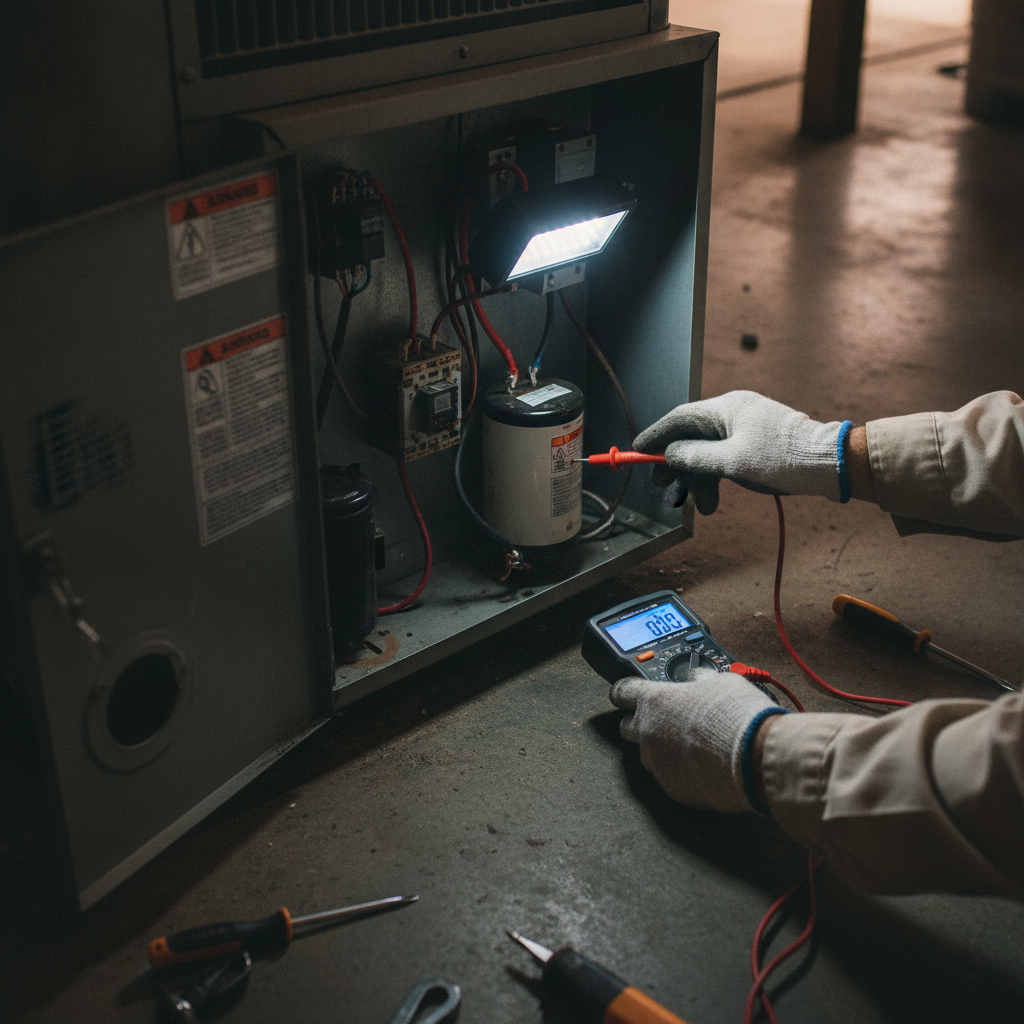
Failing capacitors. Capacitors degrade gradually. A tech measuring capacitance during a tune-up can identify a capacitor that’s still functioning but near the end of its rated life. Proactive replacement is $100 to $200. A failed capacitor that causes the compressor to burn out is a $1,500 to $3,000+ repair.
Low refrigerant. Refrigerant systems don’t consume refrigerant — if pressure is dropping, there’s a leak. A small, slow leak caught early is an inexpensive repair. The same leak left untreated for a year will deplete refrigerant to the point where the system is running without adequate lubrication, which damages the compressor. Finding it early costs a few hundred dollars. Replacing the compressor costs thousands.
Dirty evaporator coil. Coils accumulate a thin layer of debris even with regular filter changes. A tech who cleans the coil annually keeps heat transfer efficient. A coil that hasn’t been cleaned in three years may require a full cleaning procedure that takes more time and costs more, or in severe cases, needs to be replaced.
Clogged condensate drain. Drain lines in South Texas clog regularly — humidity means constant condensation, and algae builds up in the drain over time. A clogged drain causes water to back up and can trip the float switch, shutting down the system. If it overflows before the float switch trips, water damage to the air handler, ceiling, and whatever’s below it is possible. A tech flushes the drain and treats it during a tune-up. The result is a $10 treatment instead of a water damage claim.
Loose electrical connections. Vibration and heat cause wiring connections to loosen over time. Loose connections create resistance, which generates heat, which can arc and cause a fire. A tune-up includes tightening connections and checking for wear.
System Life Gets Shorter
An AC system that’s properly maintained typically lasts 12 to 15 years in South Texas. A system that’s skipped maintenance consistently may fail at 8 to 10 years. In South Texas, where replacement costs typically run $6,000 to $12,000+ for a residential system, cutting system life by even three to four years is a significant cost.
The maintenance math almost always favors keeping up with it.
Summer Breakdowns Increase
One of the most predictable effects of skipped maintenance: systems that haven’t been tuned are more likely to fail during the hottest stretch of summer. This isn’t coincidence. Components that are already stressed by deferred maintenance are pushed past their limit when temperatures peak. The compressor that was running slightly low on refrigerant since last fall gives out in July when the outdoor temperature is 105.
This is the worst-case scenario for McAllen homeowners — a failure during the hottest weeks, when every HVAC company in the RGV is stretched with service calls and scheduling is compressed.
What You Miss When You Skip
What an AC tune-up actually includes gives you the full list, but the core items are: refrigerant pressure check, capacitor testing, electrical inspection and tightening, coil inspection and cleaning, drain line clearing, thermostat calibration, and overall system performance verification. Each of these addresses something that drifts out of spec over a season of operation.
For other maintenance practices that affect long-term system health, the most common HVAC maintenance mistakes South Texas homeowners make is worth reading. Other ways to keep your AC running efficiently in the RGV covers what you can do between professional visits.
How Often Should You Get a Tune-Up in the RGV?
Once a year is the standard. Most HVAC professionals recommend scheduling in early spring — before peak cooling demand — so the system goes into summer in the best possible shape. Homes with multiple units, older systems, or high runtime may benefit from twice-yearly service.
If you’ve skipped the last year or two, schedule one now rather than waiting for next spring. The sooner a tech looks at the system, the sooner any developing issues get caught.
Frequently Asked Questions
Is skipping one tune-up really that big a deal?
Skipping one year is lower risk than skipping several. The compounding effect — efficiency loss that compounds each year, small faults that grow into expensive repairs — is what makes serial skipping costly. One missed year is a manageable risk in most cases. Three or four missed years is a different story.
Can I do my own tune-up instead of paying a technician?
Homeowners can do some maintenance tasks themselves: filter changes, condenser coil rinsing, keeping the area around the unit clear, monitoring energy bills for anomalies. But the core diagnostic components of a professional tune-up require tools a homeowner doesn’t have: refrigerant gauges, capacitor testers, electrical diagnostic equipment. The value of a professional tune-up is in the diagnostic layer, not just the cleaning.
My AC seems to be running fine. Does it still need a tune-up?
Yes. The things that fail in AC systems often give no visible warning until they give out completely. “Running fine” is the baseline expectation — the tune-up finds the things that are starting to drift before they cause the “not running at all” situation.
How much does an AC tune-up cost in McAllen?
Generally $75 to $150 for a single-system tune-up. Maintenance plans that include one or two tune-ups per year plus priority scheduling typically run $150 to $250 annually. Either is meaningfully less expensive than a single avoidable repair.
Schedule Before You Need It
Mission Air Conditioning offers HVAC maintenance services across McAllen and the Rio Grande Valley, including full tune-ups, refrigerant checks, and coil cleaning. The best time to schedule is before peak season. Reach us at missionaircon.com.