

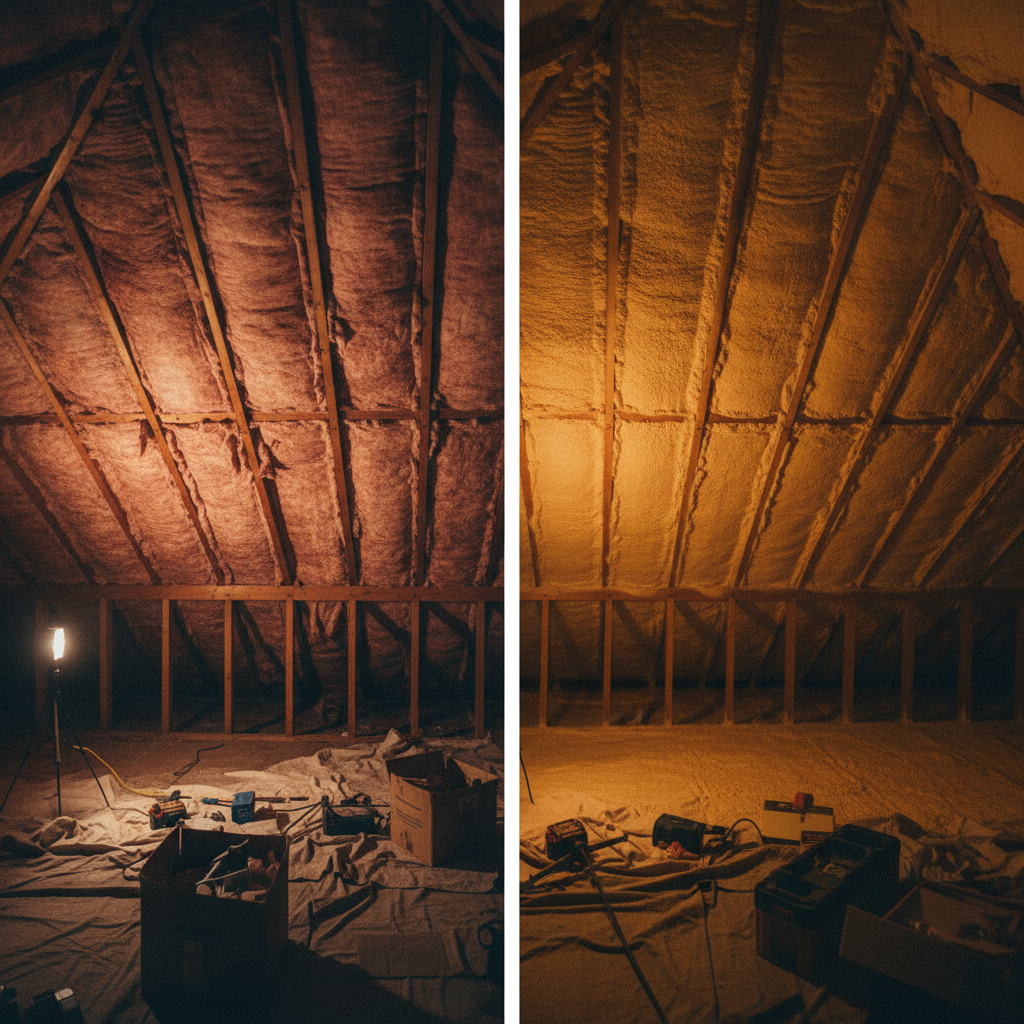
Spray foam insulation is a meaningful investment since most residential attic projects in McAllen run $3,000 to $8,000 depending on home size and foam type. The question most homeowners ask before writing that check is a fair one: when does it actually pay for itself?
The answer is better in South Texas than almost anywhere else in the country, because the economics of cooling a home in the RGV work heavily in spray foam’s favor. Here’s how to think through it.
Why South Texas ROI Is Better Than the National Average
Payback period on insulation upgrades is driven by two variables: how much you save per year, and what the upgrade cost.
In most of the country, homeowners cool their homes four to six months a year. In McAllen, you’re cooling for ten to eleven months. That extra runtime means:
- More hours where heat is transferring through your attic into your living space
- More hours where your AC is working against that heat load
- A larger annual energy reduction from cutting that heat load
The national figures often cited for spray foam payback, eight to twelve years, assume a cooling season that doesn’t match South Texas. RGV payback periods for well-upgraded homes are typically faster, often in the five to eight year range for homes with significant insulation deficiencies.
What Drives the Savings
Attic insulation works by reducing heat transfer from your roof into your living space. In South Texas, a south-facing roof can reach 160 to 180 degrees Fahrenheit in the middle of summer. Without adequate insulation, that heat pours into your attic and radiates into the rooms below.
Spray foam, particularly closed-cell foam on the roof deck, creates an air barrier and thermal barrier that dramatically reduces this heat transfer. Instead of a 160-degree roof heating your attic to 130 degrees, the attic temperature stays much closer to your conditioned living space.
Your AC doesn’t have to fight as hard. It runs fewer hours. Your AEP Texas bill goes down.
The measured savings in South Texas homes after a spray foam upgrade typically range from 15 to 30% of cooling costs, with the higher end of that range going to homes that had inadequate or degraded insulation before the upgrade. A home that was under-insulated or had old, compressed fiberglass batts in the attic will see a bigger improvement than a home that was already at code.
Running the Numbers for a Typical McAllen Home
For a concrete example: a 1,500-square-foot McAllen home with typical AEP Texas bills of $300 to $400 per month in summer and $150 to $200 in mild months might spend $2,800 to $3,500 per year on electricity, with cooling accounting for roughly 50 to 60% of that in warmer months.
If a spray foam upgrade reduces cooling costs by 20%, that’s a savings of roughly $300 to $420 per year on a $1,500 to $2,100 annual cooling spend.
Against a project cost of $3,500 to $5,500 for a 1,500-square-foot home:
- At $350/year savings: 10 to 16 years payback
- At $420/year savings (higher efficiency gain): 8 to 13 years payback
These numbers assume the home starts at a typical level of insulation. Homes with notably poor insulation, old, thin, or damaged attic insulation, can see energy bill reductions at the higher end of the range, which compresses payback significantly.
For a more detailed breakdown of project pricing, what spray foam insulation costs in McAllen is a good reference.
Other ROI Factors Beyond Energy Bills
Energy savings are the primary financial benefit, but not the only one.
AC longevity. A system running fewer hours under a lower load accumulates less wear. If spray foam insulation extends the life of your AC system by even two to three years, that adds significant value to the ROI calculation.
Home comfort. Rooms that used to be 3 to 5 degrees warmer than the rest of the house — common in under-insulated homes — become more comfortable. This is a quality-of-life benefit that doesn’t show up on a spreadsheet but is real.
Indoor humidity control. Closed-cell spray foam creates a vapor barrier, which reduces moisture infiltration through the roof deck. In a climate where your AC is already working hard to dehumidify, this reduces the moisture load and can improve indoor humidity levels on humid RGV afternoons.
Home resale. Energy efficiency upgrades are increasingly valued by homebuyers. Spray foam insulation in the attic is a verifiable, lasting upgrade that a home inspector and buyer can confirm.
Who Gets the Best ROI
The homes that see the fastest payback on spray foam upgrades in South Texas share a few characteristics:
- Older homes (15+ years) with original or degraded insulation
- Homes where attic insulation is thin, compressed, or missing in sections
- Homes with rooms that run consistently warmer than others, especially second floors or rooms directly below the roof
- Homes where the AC runs constantly but struggles to maintain temperature
- Homes with high AEP Texas bills relative to their square footage
If any of those describe your home, the payback math tilts toward the faster end of the range. Signs your home needs spray foam insulation can help you assess whether your current insulation is actually the problem.
For a deeper look at how attic insulation directly affects AC runtime and energy costs in the RGV, read how attic insulation affects your AC bill in McAllen.
Frequently Asked Questions
Is spray foam insulation worth it in McAllen?
For most homes with inadequate attic insulation, yes. The RGV’s extended cooling season makes the payback period shorter here than in most of the country. If your home is under-insulated and your AEP bills reflect it, spray foam is one of the highest-ROI home upgrades available.
How long before spray foam insulation pays for itself in South Texas?
For a well-qualified home (significant insulation deficiency, older attic, high energy bills), payback can be as short as five to seven years. For a home that was already reasonably insulated, the improvement is smaller and payback takes longer. A contractor can assess your attic and give you a more specific estimate based on current conditions.
Does spray foam insulation help with Texas heat specifically?
Yes. Spray foam, particularly closed-cell on the roof deck, is well-suited to high-heat climates. The high R-value per inch and air-sealing properties are especially valuable in climates where outdoor temperatures are extreme and sustained.
Open-cell or closed-cell for South Texas ROI?
Closed-cell generally offers better ROI in South Texas attic roof deck applications because of its higher R-value per inch and vapor barrier properties. It’s more expensive per board foot, but you need less thickness to achieve the same R-value, and the vapor barrier benefit has real value in the RGV’s humid summers. For interior wall applications, open-cell is often the better cost choice.
Get a Project Assessment
Mission Air Conditioning installs spray foam insulation in McAllen and throughout the Rio Grande Valley. If you’d like an honest assessment of your attic and what a spray foam upgrade would likely save you, reach out at missionaircon.com.