

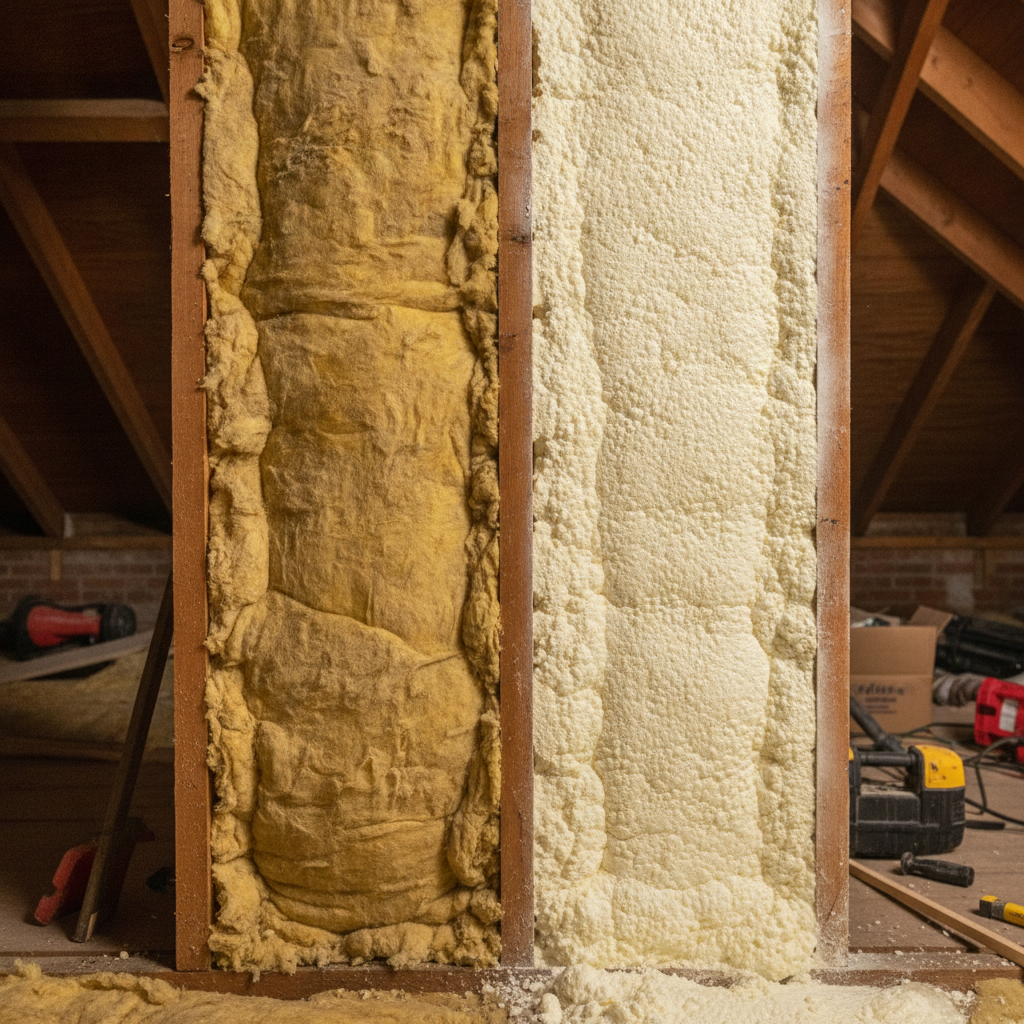
Spray foam insulation is often marketed as a permanent solution, “install it once and forget it.” That’s mostly accurate, but the details matter, especially in a climate like South Texas where attic temperatures spike into the 150s, humidity is significant, and the conditions are harder on building materials than in most of the country.
Here’s what to realistically expect from spray foam in McAllen and the RGV.
Closed-Cell Spray Foam: Built to Last
Closed-cell spray foam is the most durable insulation material commonly used in residential applications. When properly installed, it doesn’t settle, compress, or lose R-value over time. The material is inert, resistant to moisture, and structurally rigid.
Most closed-cell spray foam manufacturers offer a 20-year warranty on their products for a reason: the material is that durable. In practice, properly installed closed-cell foam typically outlasts the homes it’s installed in. There are documented applications from the 1980s and 1990s where closed-cell foam installed decades ago is still performing at spec.
For South Texas specifically: Closed-cell foam handles the RGV’s heat and humidity well. Its closed-cell structure prevents moisture absorption, which is one of the main failure modes for insulation in humid climates. The extreme attic temperatures (150+ degrees Fahrenheit in summer) can accelerate aging in some materials — spray foam handles this better than most alternatives.
What can shorten its life: Physical damage from pest activity (rodents chewing through the foam), improper installation, or inadequate coverage that leaves sections thin and vulnerable. These are installation and post-installation issues, not material limitations.
Open-Cell Spray Foam: Still Long-Lasting, But Different
Open-cell spray foam is softer, more flexible, and less moisture-resistant than closed-cell. It’s commonly used in interior wall cavities and sometimes in attic applications where budget is a bigger factor than maximum performance.
Open-cell foam also has a long service life — manufacturers typically warranty it for 20+ years, and it holds its structure well over time. The key difference from closed-cell is moisture performance. Open-cell foam is vapor-permeable, which means it can absorb and retain moisture if exposed to persistent humidity or moisture sources.
For South Texas: Open-cell foam in attic applications in a humid climate requires some attention. If the attic doesn’t have adequate ventilation for humidity management, or if there’s a roof leak or moisture intrusion, open-cell foam in an attic can accumulate moisture over time. This is less of a concern with closed-cell because the closed-cell structure blocks moisture penetration.
This is one reason most RGV HVAC and insulation contractors recommend closed-cell for roof deck applications in South Texas and open-cell primarily for interior wall applications. See how spray foam compares to fiberglass insulation for South Texas homes for more on when each type makes sense.
Signs That Spray Foam Needs Attention
For most correctly installed spray foam, the answer to “when do I need to replace it?” is “probably never, within the home’s lifetime.” But here are situations where spray foam may need inspection or repair:
After a roof issue. If you’ve had a significant roof leak, get the attic insulation inspected. Water that finds its way behind or under foam can cause issues if it’s trapped. This isn’t unique to spray foam, but it’s worth checking after any roof event.
After pest activity. Rodents can damage spray foam by chewing through it. If you’ve had a rodent problem in the attic, have the foam inspected and any damaged sections repaired.
Visible cracking or crumbling. This is uncommon in properly installed foam but can occur if the foam was applied too thin (less than the minimum rated thickness), the substrate wasn’t prepared correctly, or there was an issue with the foam mixture during installation. If sections look physically degraded, have a contractor assess.
If R-value testing shows significant degradation. In practice, this almost never happens with spray foam unless there’s physical damage or severe moisture infiltration. Fiberglass and blown insulation lose R-value over time through settling and compression; spray foam does not.
Comparing Spray Foam Lifespan to Other Insulation Types
| Closed-Cell Spray Foam | Open-Cell Spray Foam | Fiberglass Batts | Blown Fiberglass | |
|---|---|---|---|---|
| Expected lifespan | 25+ years (often lifetime) | 20+ years | 10–25 years (degrades with settling) | 15–20 years (settles) |
| Loses R-value over time? | No | Minimal | Yes (compression) | Yes (settling) |
| Moisture resistance | Excellent | Limited | Poor | Poor |
| South Texas performance | Excellent | Good (interior) | Moderate | Moderate |
Fiberglass insulation — both batt and blown — compresses and settles over time, which reduces its R-value. In South Texas attics where the weight of extreme heat cycles and occasional humidity spikes stress the material, this degradation happens faster than in cooler climates. Spray foam doesn’t share this weakness.
What the Warranty Actually Covers
Manufacturer warranties for spray foam typically cover the material’s performance properties (maintaining rated R-value) for the warranty period. They generally don’t cover damage from external causes (pest activity, improper installation, moisture intrusion from a roof leak). Installer workmanship warranties, which cover installation quality, are separate and typically run one to five years depending on the contractor.
When getting quotes for spray foam in McAllen, ask about both the manufacturer product warranty and the installer’s workmanship warranty.
Does Age Affect the Decision to Buy Spray Foam?
Not significantly from a performance standpoint. Whether you’re in a 5-year-old home or a 40-year-old home, properly installed closed-cell spray foam will outlast the remaining useful life of the structure in most cases. The decision to invest is primarily about the ROI calculation — the ROI on spray foam insulation in South Texas and what spray foam insulation costs in McAllen together give you the picture.
Frequently Asked Questions
Does spray foam insulation lose R-value over time?
Closed-cell spray foam does not lose meaningful R-value under normal conditions. This is one of its significant advantages over fiberglass, which settles and compresses over time. Open-cell foam is also stable, but can be affected by prolonged moisture exposure.
How long does spray foam last in a hot climate like South Texas?
Properly installed closed-cell spray foam handles high heat environments well. The material is rated for attic temperatures well above what a South Texas roof deck reaches. There are no documented cases of properly installed, quality spray foam failing due to heat alone.
Can I add spray foam over existing insulation?
In some cases, yes. Closed-cell foam can go over old blown fiberglass in certain configurations. However, the result depends on the existing insulation’s condition and what the project goals are. A contractor should assess your specific attic before deciding whether to remove existing insulation or install over it.
Will spray foam need to be replaced when I reroof?
Most roofing contractors can work around spray foam on the underside of the roof deck. The foam doesn’t need to be removed for a typical reroof. If you’re replacing the roof deck itself (not just the shingles), the situation is more complex — discuss this with both your roofing contractor and your insulation installer.
Questions About Your Attic?
Mission Air Conditioning installs spray foam insulation in McAllen and throughout the Rio Grande Valley. If you’d like an attic assessment or want to know whether your current insulation is doing its job, reach out at missionaircon.com.