

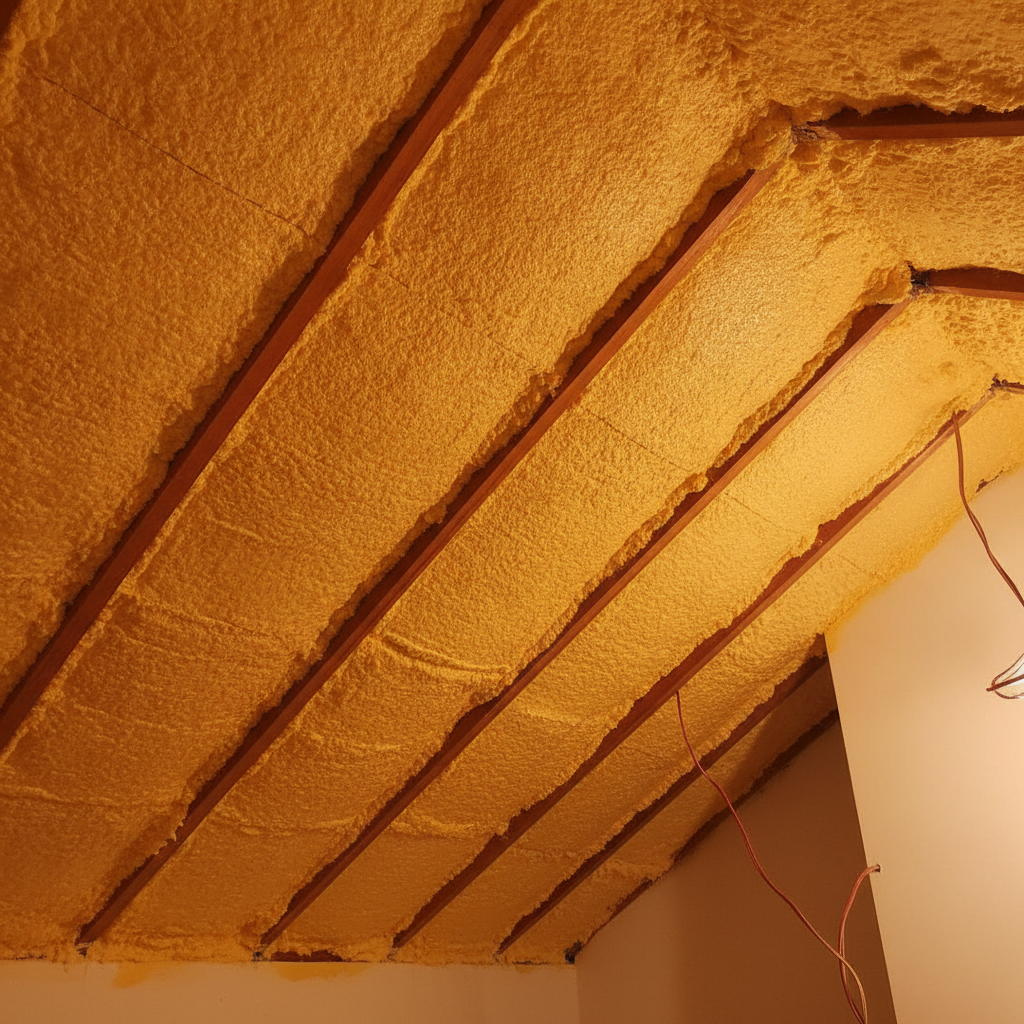
If your AEP Texas bill is higher than you’d expect for your home size, your attic is the most likely culprit. In South Texas, more heat enters homes through the attic than through any other part of the building envelope. And because your AC runs 10 to 11 months a year, every degree of uncontrolled heat gain compounds into a significant energy cost.
Here’s how the physics of attic heat actually work, and what better insulation does to your energy bill.
The Basic Problem: South Texas Roofs Get Extremely Hot
On a summer afternoon in McAllen, a south- or west-facing roof surface can reach 160 to 180 degrees Fahrenheit. That heat conducts through the roof sheathing and radiates into the attic below. Without adequate insulation between the attic and your living space, that heat flows into your home continuously during the day.
Your AC’s job is to remove heat from your living space faster than it enters. When your attic is a 130-degree heat source right above your ceiling, your AC is fighting a continuous uphill battle. It runs longer, cycles more often, and drives up your energy bill.
Every degree of average interior temperature that your attic contributes adds directly to AC runtime. In a South Texas home with inadequate attic insulation, the attic can raise interior temperatures by 5 to 10 degrees on peak summer afternoons compared to a well-insulated home — a difference that can add hours of AC runtime per day.
What “Adequate” Insulation Actually Means
The Department of Energy recommends R-38 to R-60 for attic insulation in South Texas, that’s roughly 10 to 15 inches of blown fiberglass, or 2 to 3 inches of closed-cell spray foam applied to the roof deck.
Many homes in the RGV don’t come close to those values, especially older ones. Homes built in the 1970s through 1990s were typically insulated to lower standards. Insulation that was installed 20 to 30 years ago has also likely compressed and degraded, further reducing its effective R-value.
If you’ve never had your attic insulation evaluated, there’s a reasonable chance it’s below what it should be.
How Better Insulation Reduces Your Bill
Upgrading your attic insulation does two things that reduce cooling costs:
It slows heat transfer. More insulation (higher R-value) means heat moves more slowly from your hot attic into your conditioned living space. Your AC can maintain your set temperature with less runtime.
It reduces peak load. On the hottest afternoons, when outdoor temperatures peak and your attic is at its hottest, a well-insulated home maintains a cooler interior than a poorly insulated one. This means the gap between your thermostat setting and the “natural” interior temperature is smaller, so your system cycles less aggressively during the period when electricity is most expensive.
The measurable result in South Texas: homes with significant insulation deficiencies that upgrade to proper attic insulation typically see cooling cost reductions of 15 to 30%. Homes that were already near-adequate see smaller improvements, typically 5 to 15%.
Spray Foam vs. Traditional Insulation for the Attic
Most attic insulation is either blown fiberglass, blown cellulose, or fiberglass batts. All of these work on the attic floor (above your ceiling), creating a thermal barrier between the attic and your living space. The attic itself stays unconditioned and can still get extremely hot.
Spray foam applied to the attic roof deck (the underside of the roof sheathing) works differently. Instead of just slowing heat transfer into the living space, it dramatically reduces how hot the attic gets in the first place. The attic becomes a semi-conditioned space, not fully cooled, but significantly cooler than the outdoor temperature.
This matters for two reasons: it reduces the heat load on everything in the attic (including ductwork, which is a significant energy loss point in many South Texas homes), and it eliminates the extreme heat that degrades blown insulation over time.
For a detailed comparison, how spray foam compares to fiberglass insulation in South Texas lays out when each type makes sense.
The Ductwork Connection
In most South Texas homes, the air conditioning ductwork runs through the attic. If the attic is 130 degrees and the ductwork is inadequately insulated (or has leaks), your AC is pushing cold air through a 130-degree environment before it ever reaches your living space.
Ductwork heat gain can reduce your system’s effective cooling output by 20 to 30%. A home with good attic insulation and ductwork in the conditioned space (or properly insulated ducts) loses significantly less cooling before the air reaches the vents.
Spray foam on the roof deck that brings the attic into a cooler temperature range reduces ductwork heat gain without requiring the ducts themselves to be replaced.
Signs Your Attic Insulation Is the Problem
- Your AC runs constantly during afternoon hours but the house still feels warm
- Certain rooms (especially those directly below the attic) are consistently harder to cool
- Your AEP Texas bills are high relative to your home size
- The attic insulation looks thin, compressed, or patchy
- The home is more than 15 years old and insulation has never been upgraded
- Your energy bills have been creeping up without any increase in usage
Any of these are worth a professional attic evaluation to see what’s actually there and what would make the biggest difference.
What to Expect From an Upgrade
Most attic insulation projects in McAllen take one day. The scope depends on what’s there currently and what approach is right for your home. A contractor evaluating your attic should:
- Measure current insulation depth and estimate current R-value
- Identify air bypasses (gaps around penetrations, at top plates, around HVAC equipment)
- Assess ductwork condition and insulation while in the attic
- Recommend the right material and approach for your home’s configuration
Air sealing is often done alongside insulation upgrades — closing gaps and penetrations reduces heat infiltration in ways that adding more insulation alone doesn’t address.
For a full picture of the financial case for spray foam specifically, read the ROI on spray foam insulation in South Texas. For other ways to get more efficiency from your existing AC while your insulation decision is pending, other ways to keep your AC running efficiently in the RGV has practical tips.
Frequently Asked Questions
How much can I save on my AEP Texas bill with better attic insulation?
It varies significantly based on current insulation quality, home size, and what upgrade you do. Homes with notably inadequate insulation can see 20 to 30% reductions in cooling costs. Homes that are closer to adequate will see more modest improvements. A contractor can estimate savings based on your current attic conditions.
What R-value do I need in my attic in McAllen?
The Department of Energy recommends R-38 to R-60 for Zone 2 climates, which covers the RGV. R-38 is the reasonable minimum; R-49 to R-60 is where you see diminishing returns at current energy prices.
Will adding attic insulation make a noticeable difference?
In homes with below-code insulation, which describes a significant share of older McAllen homes, yes, noticeably so. The difference is most obvious on peak summer afternoons: the house maintains temperature more easily and the AC cycles less aggressively.
Does spray foam in the attic eliminate the need for blown insulation?
It depends on the application. Spray foam on the roof deck creates an air seal and thermal barrier in the roof plane and can serve as the primary insulation in that location. Whether additional blown insulation on the attic floor is needed depends on your home’s configuration and where your ductwork runs. Your contractor should evaluate the whole attic, not just one component.
Get an Attic Assessment
Mission Air Conditioning installs spray foam insulation in McAllen and the Rio Grande Valley and provides full HVAC services including maintenance and tune-ups. If your energy bills are higher than they should be, let us take a look at your attic. Reach out at missionaircon.com.