

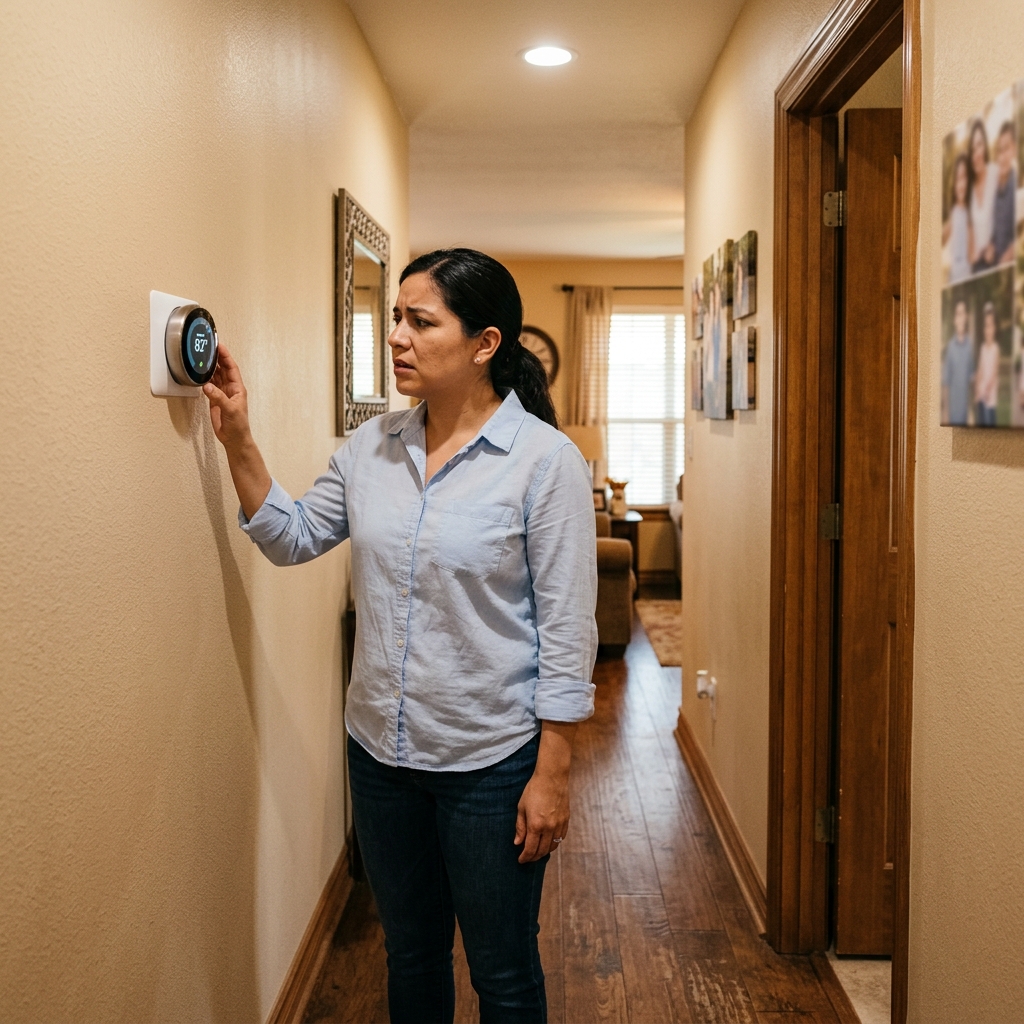
An AC unit that’s frozen not only looks wrong but it’s also making your system not effectively cool your house. In South Texas summer heat, a frozen AC is one of the more frustrating problems you can run into.
Here’s what causes it, what you should do right now, and when you need to call someone.
What “Freezing Up” Actually Means
When people say their AC is frozen, they usually mean one of two things: ice forming on the refrigerant lines outside the house, or ice on the coils inside the air handler. Sometimes both.
The ice itself isn’t the root problem, it’s just a symptom. Something is causing the evaporator coil to drop below 32°F, which causes moisture in the air to freeze on the coil surface. As ice builds up, airflow drops further, the coil gets colder, more ice forms. Left alone, it can freeze solid and cause compressor damage.
Most Common Causes of a Frozen AC
1. Dirty or clogged air filter
This is the #1 cause. When not enough air flows across the evaporator coil, the coil temperature drops too low and freezes. In South Texas, where systems run nearly year-round, filters load up faster than most people expect. A filter that hasn’t been changed in more than 6–8 weeks during summer can restrict airflow enough to cause a freeze-up.
2. Blocked or closed vents
If multiple supply or return vents throughout the house are closed or blocked by furniture, airflow through the system drops. Less airflow across the coil means a colder coil, and eventually ice.
3. Low refrigerant
If your system is low on refrigerant due to a leak, the pressure inside the refrigerant circuit drops. Lower pressure means lower coil temperature and a coil running too cold freezes up. A system that keeps freezing after you’ve cleared the airflow issue almost certainly has a refrigerant leak.
4. Failing blower fan
The blower fan moves air across the evaporator coil. If the fan motor is weak or failing, airflow drops and the coil freezes. You might notice the system is quieter than usual or that air coming from vents feels weak.
5. Running the system in cold weather
McAllen doesn’t get cold often, but when nighttime temperatures drop below 60°F, running your AC can cause the system to freeze. This is an easy fix, just don’t run the AC when it’s that cool outside.
What to Do Right Now
Step 1: Turn the system off, but leave the fan on. Switch your thermostat to “fan only” or just “off.” Don’t leave it on “cool” because running a frozen system can damage the compressor. The fan-only setting runs the blower and helps melt the ice without running the refrigerant cycle.
Step 2: Let it thaw completely. Depending on how much ice has built up, this can take 1–3 hours. Don’t try to chip or scrape ice off the coil, doing this can damage the fins.
Step 3: Check and replace the filter. Once the system is thawed, pull the air filter. If it’s visibly dirty or hasn’t been changed in more than 6–8 weeks, replace it before restarting.
Step 4: Restart and monitor. Turn the system back to cooling. If it runs normally and doesn’t freeze again within a day or two, a dirty filter was likely the culprit.
Step 5: Call if the problem comes back. If the system freezes again after you’ve changed the filter and confirmed all vents are open, you have a different problem, this is most likely a refrigerant leak or failing blower. That issue needs a technician.
When It’s More Than a Filter
Refrigerant leaks don’t fix themselves. If your system keeps freezing after a filter change, the refrigerant pressure needs to be checked. You can read more about why your AC isn’t cooling properly for a broader look at underperforming systems in South Texas.
If warm air is the main symptom alongside the freeze-up, read about why your AC is blowing warm air. This article covers the refrigerant and airflow issues in more depth.
How to Prevent Freeze-Ups
The best prevention is maintenance: changing your filter every 30–45 days during peak season, keeping return vents unobstructed, and scheduling a spring tune-up before summer. What a proper HVAC tune-up covers includes a refrigerant pressure check, coil inspection, and blower performance test, exactly the checks that catch freeze-up causes before they happen.
Frequently Asked Questions
How long does it take for a frozen AC to thaw?
Usually 1–3 hours with the system off and fan running. Heavily iced systems can take longer. Don’t try to rush it by using heat, just let it thaw naturally and check the drain pan for excess water.
Can a frozen AC cause permanent damage?
Yes, if it keeps running. A frozen evaporator coil forces the compressor to work under abnormal pressure, which can cause compressor failure over time. As soon as you notice ice, shut the system off.
My AC froze but the filter is clean. What else could it be?
Low refrigerant is the most common cause when the filter isn’t the issue. Other possibilities include a failing blower motor, a dirty evaporator coil (which accumulates even with regular filter changes), or blocked return vents. A technician can diagnose this quickly with a refrigerant pressure check.
How often should I change my filter in McAllen to avoid freeze-ups?
Every 30–45 days during peak cooling season (April–October), and every 60 days the rest of the year. South Texas systems run longer than most, which means filters load up faster than standard manufacturer recommendations suggest.
Still Freezing Up?
If your AC has frozen up and a filter change didn’t solve it, Mission Air Conditioning can diagnose the root cause across McAllen and the Rio Grande Valley. Our AC repair services cover everything from refrigerant leaks to blower failures, we’ll give you a straight answer on what’s wrong and what it costs to fix before any work starts. Call us or schedule at missionaircon.com.