

You set the thermostat to a normal number, the AC runs all afternoon, and the house still feels sticky. Maybe a musty smell drifts out of the vents when the system kicks on, or somebody’s allergies never quite settle down between May and October. In McAllen and across the Rio Grande Valley, complaints like these can trace back to one thing: too much moisture in the air you breathe indoors.
Indoor air quality covers everything in that air, from dust and pollen to cooking fumes. In the RGV, humidity deserves the first look, because the EPA ties mold control directly to moisture control. Humidity is easy to measure, and most of the fix runs through equipment you already own: your air conditioner.
If your home stays damp even with the AC running, Mission Air Conditioning can inspect the system and tell you plainly whether it is pulling moisture out of the air the way it should. You get an honest read on the equipment, with no pitch for gadgets you don’t need.
Why Humidity Drives Indoor Air Quality in the RGV
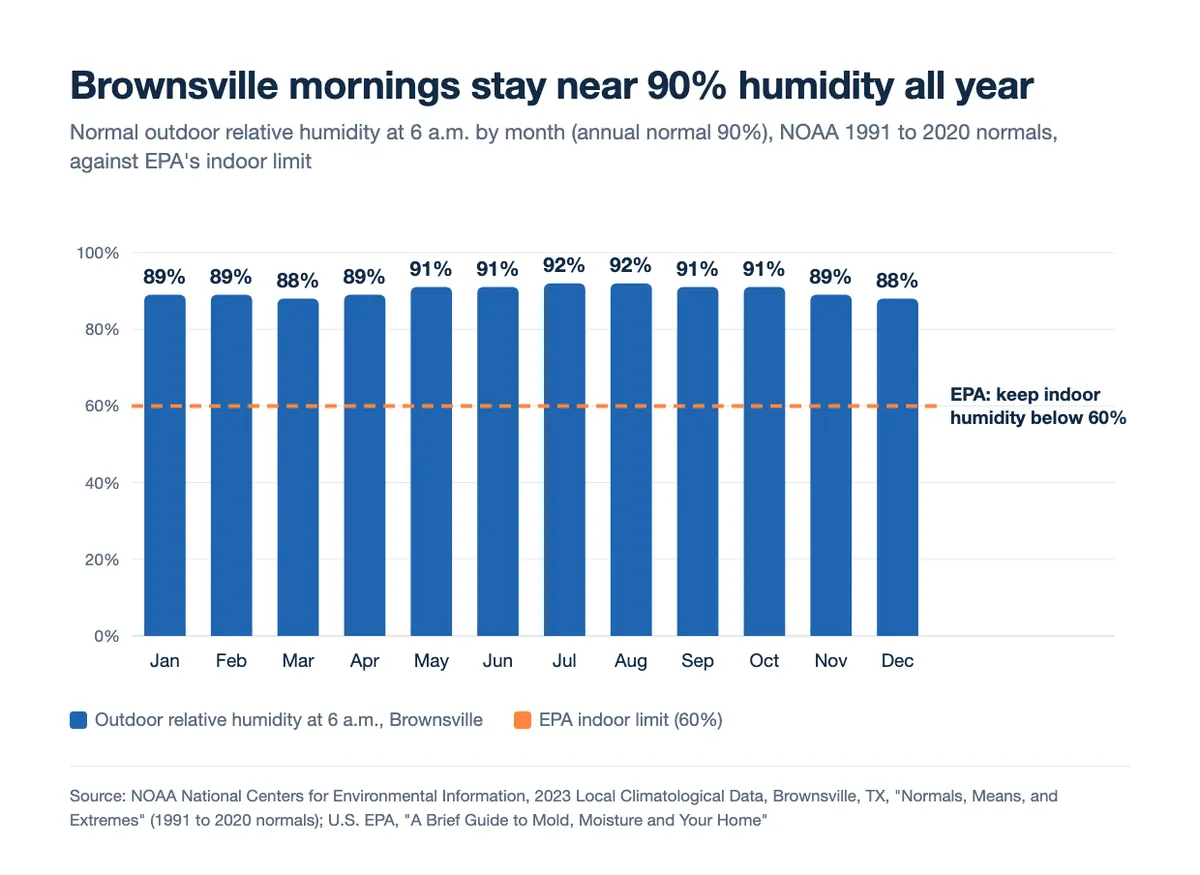
Humidity drives indoor air quality in the Rio Grande Valley because the outdoor air here carries more moisture, for more of the year, than it does in most of the country. At the National Weather Service’s long-term station in Brownsville, the normal relative humidity at 6 a.m. is 90 percent across the year, and it holds at 91 to 92 percent from May through October. Summer dew points at that station average about 76°F, so the air outside is already loaded with water vapor before any of it leaks into your house. Brownsville also averages about 140 days a year at 90°F or hotter, which keeps your AC carrying that moisture load for months at a time.
The Department of Energy’s climate map places Hidalgo County in the “hot-humid” zone. A home in a hot-humid climate has to shed moisture as well as heat for most of the year.
You also spend a lot of hours breathing that indoor air. The EPA estimates that people spend about 90 percent of their time indoors, and it notes that indoor air pollution can be as high as outdoor levels, and sometimes higher. Older adults, children, and people with asthma or heart disease can be more vulnerable to poor indoor air, according to the EPA.
What High Humidity Does to Your Health and Your Home
High indoor humidity gives mold the moisture it needs to grow, and mold affects both the people and the structure.
Damp air feeds mold, and mold affects people. The CDC says mold can cause a stuffy nose, sore throat, coughing or wheezing, burning eyes, or a skin rash in some people. People with asthma or mold allergies may have severe reactions, according to the CDC. The EPA adds that mold can irritate the eyes, nose, throat, and lungs even in people who aren’t allergic to it.
Mold is one of several indoor asthma triggers. The EPA lists mold, dust mites, pollen, pet allergens, and pests like cockroaches among the things that can set off asthma symptoms and allergic reactions indoors. Of the triggers on that list, mold is the one the EPA ties directly to moisture control.
The house pays for it too. The EPA sums up its mold guidance in one line: “The key to mold control is moisture control.” The rest of the EPA’s mold advice keeps coming back to water: fix leaks, dry wet materials quickly, and act fast when condensation collects on windows, walls, or pipes.
What Indoor Humidity Level Should You Aim For?
Keep indoor relative humidity below 60 percent, and ideally between 30 and 50 percent, which is the EPA’s guidance for preventing mold. The CDC’s advice is a little stricter: keep humidity as low as you can and no higher than 50 percent, all day long.
| Indoor humidity reading | What it means | What to do |
|---|---|---|
| 30 to 50 percent | The range the EPA calls ideal | Keep your current routine |
| 50 to 60 percent | Above the CDC’s 50 percent mark, still under the EPA’s 60 percent limit | Run exhaust fans, fix leaks, and watch the trend |
| Consistently above 60 percent | Past the EPA’s limit; the EPA says this calls for a specific dehumidification strategy | Have the AC system inspected |
A humidity meter, also called a hygrometer, is the cheapest way to know where your home stands. The EPA says these meters cost about $10 to $50 at many hardware stores. Set one in a main living area, away from the kitchen and bathrooms, and check it at a few different times of day.
How Your AC System’s Condition Affects Indoor Air Quality
In a home without a separate dehumidifier, the central AC is the equipment pulling moisture out of the air, so its condition directly shapes the air you breathe. As warm indoor air crosses the cold coil inside the air handler, water vapor condenses on the coil, drips into a drain pan, and leaves the house through the condensate line. When any link in that chain breaks down, the moisture stays inside.
An oversized unit cools the air before it dries it. ENERGY STAR explains that an air conditioner has to run long enough for moisture to condense on the coil and drain away. An oversized system short cycles, shutting off before that happens, and some of the water on the coil evaporates right back into the house. ENERGY STAR says air that isn’t properly dehumidified is uncomfortable and promotes mold and mildew indoors. If your system switches on and off every few minutes, read about what short cycling means for your AC. If you’re shopping for a replacement, see how to size an AC for a McAllen home.
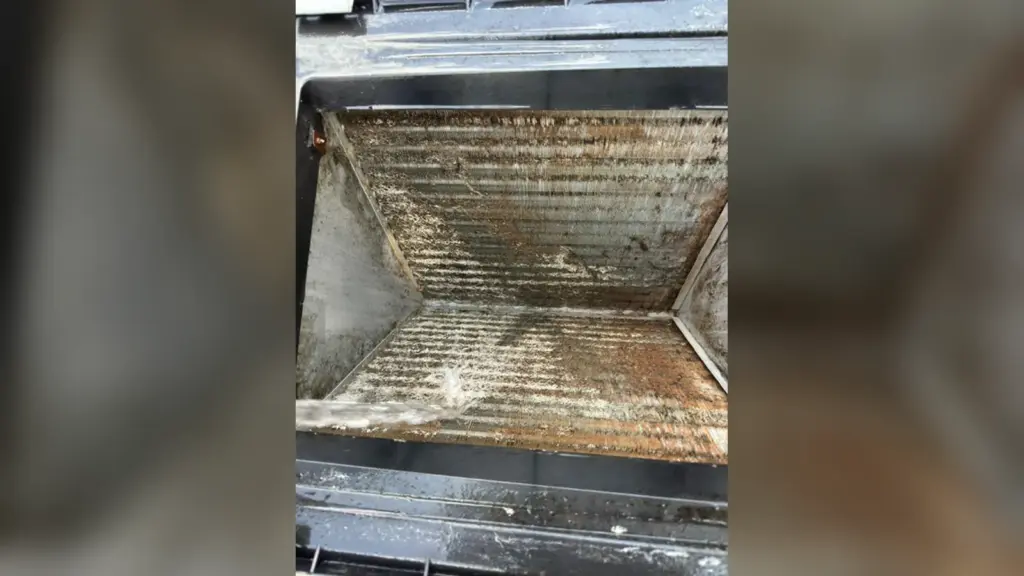
A dirty coil or a clogged drain pan turns into a moisture source. The EPA warns that cooling coils, which are built to pull water out of the air, can become a major source of moisture contamination that leads to mold growth. The EPA also says standing water or debris in the condensate pan “indicates a problem requiring immediate attention.”
A big system can hide small problems. ENERGY STAR notes that the large output of an oversized unit can mask dirty filters, leaky ducts, and an improper refrigerant charge. An oversized system can leave a house feeling cool enough while the humidity quietly climbs.
The filter matters, but it can’t do the whole job. A clean filter catches particles and keeps air moving across the coil, and the Mission Air guide on how often to change your AC filter in South Texas covers the timing. The EPA is clear that HVAC filters and portable air cleaners can reduce indoor air pollution but cannot remove all pollutants from the air.
What You Can Do Yourself to Improve Indoor Air Quality
The most useful things you can do yourself start with removing moisture at its source. The EPA says the most effective ways to improve indoor air are to reduce or remove the sources of pollutants and to ventilate.
- Measure before you guess. A hygrometer tells you whether you have a humidity problem or a temperature problem, and the answer changes what you do next.
- Use your exhaust fans. The EPA recommends running kitchen and bathroom exhaust fans when you cook and shower.
- Dry leaks fast. The EPA says that if wet materials are dried within 24 to 48 hours of a leak or spill, mold will not grow in most cases. After a heavy Valley rain, check under sinks, around windows, and near the indoor unit.
- Glance at the drain pan. If you can see the pan under your indoor unit, standing water in it is worth a service call, since the EPA advises keeping AC drip pans clean and drain lines flowing.
- Keep up with the routine habits. Regular filter changes keep the system running the way it was designed, and the rest of the seasonal checklist is in how to keep your AC running efficiently all summer in the RGV.
When to Call an HVAC Pro About Indoor Air Quality
Call an HVAC pro when your indoor humidity stays above 60 percent even though the AC is running. The EPA says that is the point where air conditioning alone isn’t keeping up and a specific dehumidification strategy is needed.
Other signs that deserve a professional look:
- A musty smell when the system starts up
- Water pooling around the indoor unit, or a drain pan that holds water
- A system that turns on and off every few minutes
- Rooms that feel cool but still damp
Skip the upsell you don’t need. Duct cleaning often gets pitched as an air-quality fix. The EPA says duct cleaning “has never been shown to actually prevent health problems,” and it names moisture control as the most effective way to prevent biological growth in ducts.
Mission Air Conditioning starts with the system you already have. A Mission Air maintenance visit includes an inspection of the whole HVAC system, cleaning of the coils, filters, and drains, and a check of thermostat accuracy and refrigerant levels. The coil, the filter, and the drain are the parts that decide how much water your AC pulls out of the air. If the inspection turns up a bigger problem, you get a plain explanation and the choice of what to do about it.
Homeowners who want that care on a schedule can join the Mission Care Plan, which includes two tune-ups a year for $19.95 per location per month. Learn more about HVAC maintenance in McAllen, or browse all of Mission Air’s HVAC services.
FAQ
Is 70% humidity indoors too high?
Yes, 70 percent indoor humidity is too high. The EPA recommends keeping indoor humidity below 60 percent, with 30 to 50 percent as the ideal range. A home that holds 70 percent with the AC running should have the system checked for sizing, coil, or drainage problems.
Does keeping the AC on help with humidity?
Running the AC does remove humidity, because water vapor condenses on the cold coil and drains out of the house. An air conditioner dries the air well only when it runs in long enough cycles, which is why an oversized, short-cycling unit can leave a cool house feeling damp. The EPA adds that if indoor humidity stays above 60 percent with the AC in use, the home needs a specific dehumidification strategy.
What are the symptoms of poor indoor air quality?
Mold, a common result of high indoor humidity, can cause a stuffy nose, sore throat, coughing or wheezing, burning eyes, or a skin rash, according to the CDC. People with asthma or mold allergies may react more severely. Symptoms like these have many possible causes, so bring health concerns to a doctor and check your home’s humidity at the same time.
Is there a way to check indoor air quality at home?
Yes, and humidity is the easiest part of indoor air quality to check yourself. A basic humidity meter costs about $10 to $50 at many hardware stores, according to the EPA. A reading that stays above 60 percent, a musty smell, or water around the indoor unit are all reasons to have the AC system inspected.
Should I have my air ducts cleaned to improve air quality?
Duct cleaning should not be your first step for better indoor air. The EPA says duct cleaning “has never been shown to actually prevent health problems,” and it names moisture control as the most effective way to prevent biological growth in ducts. Start with your humidity reading and the condition of the coil and drain.
Start With the Humidity Reading
In the RGV, better indoor air quality mostly comes down to drier indoor air. Start with a humidity reading and the leaks you can fix yourself. If the number still sits above 60 percent, have a technician check the part of the system that does the drying. Mission Air Conditioning serves homeowners in McAllen, Edinburg, Mission, and the surrounding Valley. Contact Mission Air or call or text (956) 477-4967 to schedule an HVAC inspection.