

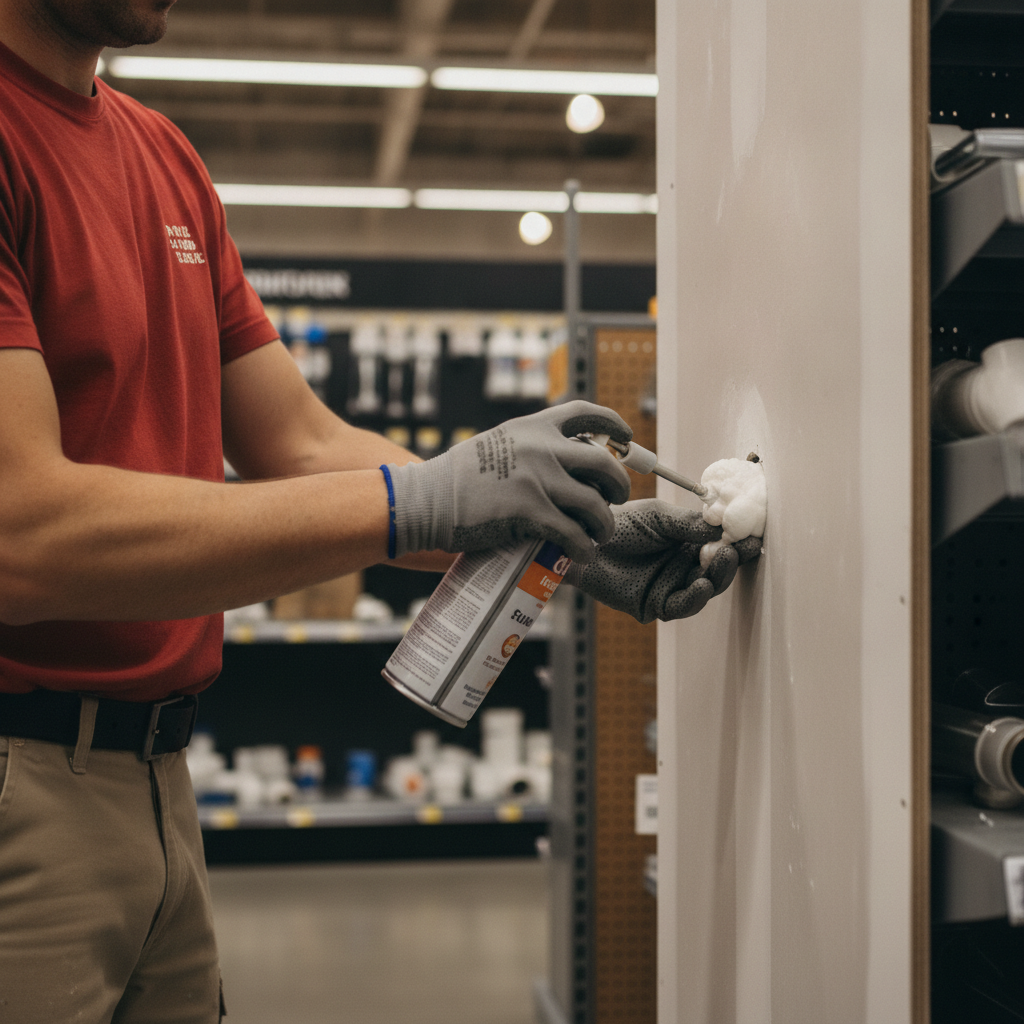
The short answer: for small targeted repairs, maybe. For a full attic project, no.
Spray foam DIY kits exist and are sold at home improvement stores. They work. But the gap between what a DIY kit can do and what a professional attic insulation project requires is large enough that most McAllen homeowners who try to DIY a full attic end up spending more money than if they’d hired a contractor from the start.
Here’s what you should know before deciding.
What DIY Spray Foam Kits Can Actually Do
Two-component spray foam kits come in various sizes, typically measured in board feet (the amount of coverage at 1-inch thickness). A common kit covers 15 to 200 board feet, depending on the size you buy. These kits consist of two pressurized tanks (the A and B components), a mixing nozzle, and hoses.
They’re genuinely useful for:
- Sealing air gaps around penetrations. Pipes, wires, and conduits that pass through walls and ceilings are common air leak points. A small spray foam kit is an excellent tool for sealing these gaps. This is their best use case.
- Rim joist insulation. The rim joist (where your home’s framing meets the foundation) is a significant air leak and heat gain point. Sealing rim joists with a DIY kit is a well-documented DIY project.
- Small attic bypasses. Top plates, dropped soffits, and attic hatches can be sealed with a small kit effectively.
- Filling voids around windows and doors. Not a standard use but common for air sealing.
For any of these smaller, targeted applications, a DIY kit is a reasonable tool in the hands of a careful homeowner.
Why Full Attic Projects Aren’t Good DIY Candidates
A full attic spray foam project, insulating the roof deck, the floor, or large wall sections of an attic, involves conditions and requirements that DIY kits don’t handle well.
Temperature sensitivity is extreme. Spray foam components must be at the right temperature (typically 70 to 80 degrees Fahrenheit) at the point of application to react and expand properly. In a McAllen attic in summer, where temperatures can exceed 150 degrees, the foam components heat up rapidly and the reaction is difficult to control. Off-temperature foam can fail to expand correctly, cure incorrectly, or create voids. Professional contractors use equipment that manages component temperature throughout the job.
Coverage calculation is difficult. Achieving the correct thickness over an entire attic requires experience and specialized equipment. Spray foam applied too thin doesn’t achieve its rated R-value. DIY application in an irregular attic space almost always results in inconsistent coverage.
Equipment limitations. Professional spray foam systems use proportioning machines that maintain precise ratios of the two components throughout the job. DIY kits have simpler delivery systems where the ratio can drift, especially as the tanks empty. Off-ratio foam has compromised physical properties.
Safety requirements. Both spray foam components are irritants and the off-gassing during application is significant. Professional applicators use supplied-air respirators (not just N95 masks), full protective gear, and ensure adequate ventilation during and after application. Doing this correctly in a residential attic without professional equipment is difficult.
Closed-cell density requirements. Professional-grade closed-cell spray foam achieves 2 to 3 pounds per cubic foot density, which is what gives it its R-value, structural rigidity, and moisture barrier properties. Consumer-grade DIY kits typically produce lower-density foam with inferior performance properties.
The Cost Comparison That Usually Ends the DIY Conversation
A DIY spray foam kit that covers a 1,200-square-foot attic at 3 inches of coverage requires roughly 3,600 board feet of foam. At current prices, you’re looking at $1,500 to $2,500+ just in kit costs, and that assumes you buy the right amount without waste, which almost never happens with DIY attic applications.
A professional installation of the same project often runs $3,500 to $6,000, but delivers better foam quality, correct coverage, guaranteed installation, and manufacturer warranty. The material cost difference is narrower than it looks, and the professional job comes with workmanship warranty, correct density, and reliable coverage.
For the full pricing breakdown on professional installation, read what professional spray foam installation costs in McAllen.
When to Call a Pro vs. DIY
| Task | DIY Reasonable? | Why |
|---|---|---|
| Sealing air gaps around pipes/wires | Yes | Small coverage, easy access, targeted |
| Rim joist insulation | Yes | Accessible, manageable coverage area |
| Attic hatch sealing | Yes | Small area, easy to work with |
| Full attic roof deck project | No | Temperature issues, coverage, safety, material quality |
| Wall cavity injection | No | Requires specialized equipment |
| Large floor or ceiling areas | No | Coverage calculation, material volume |
What to Look For in a Spray Foam Contractor
If you’re moving forward with a professional installation, ask the contractor:
- Are they certified by the spray foam manufacturer whose product they’re using?
- Do they use two-component spray foam systems with component temperature management?
- What density foam do they install (2-pound closed-cell is the standard for attic roof decks in South Texas)?
- What R-value will the project achieve, and at what thickness?
- What’s their workmanship warranty?
Whether your home actually needs spray foam insulation can help you decide if this is the right project before you start getting quotes. And if you’re comparing spray foam to other options, how spray foam compares to fiberglass for South Texas homes lays out the performance differences.
Frequently Asked Questions
Are DIY spray foam kits safe to use?
With proper protection (gloves, eye protection, respirator rated for isocyanate vapors) and adequate ventilation, yes. The risk is primarily in respiratory exposure during application. Do not apply spray foam in enclosed spaces without ventilation, and vacate the area during and after application until the foam has cured and off-gassing is complete (typically 24 hours for a finished job, less for small patches).
Can DIY spray foam achieve the same performance as professional foam?
No. Consumer-grade kits produce lower-density foam with lower R-value per inch and weaker physical properties than professional closed-cell foam. For air sealing small gaps, the difference doesn’t matter much. For a full attic insulation project where you’re relying on the material’s thermal performance, it matters a lot.
What if I just want to top off existing insulation to add R-value?
Adding blow-in fiberglass or cellulose over existing blown insulation is a more practical DIY project for topping off R-value. Equipment rentals for blown insulation are available at most home improvement stores and the material is straightforward to apply. This approach doesn’t give you the air-sealing and moisture barrier benefits of spray foam, but for simply adding R-value, it’s a simpler project.
Can I spray foam my attic floor instead of the roof deck?
Yes, but the application and benefits are different. Spray foam on the attic floor (above the ceiling below) keeps the attic itself unconditioned. Spray foam on the roof deck brings the attic into the conditioned space. Which approach is better depends on your ductwork location and your goals, an HVAC contractor can walk you through the tradeoffs.
Ready to Get an Estimate?
Mission Air Conditioning installs spray foam insulation in McAllen and throughout the Rio Grande Valley. We’ll assess your attic and give you a straightforward quote with no pressure. Reach out at missionaircon.com.